
The following was written for a Manhole Covers internet group. I felt moved to share the story of the tragedy in Itaewon with people who, perhaps, had not been aware of it.
You can watch a subtitled video entitled “Seoul Halloween Crowd Crush, the stories of survivors” by Undercover Korea here.

The following links are the two pieces I’ve written in the past. I will continue to provide updates as they are made available. I know that there are still families of the deceased who are fighting for recognition from the government that they dropped the ball that night and did not effectively handle the situation, but much of that news is in Korean (obviously).
Tw: d*ath, su*c*de, crowd crush

This is an ordinary, undistinctive manhole cover in Itaewon, Seoul, South Korea, on a rainy, dreary November morning.
Manhole covers, through the pictures we show here, speak a thousand words, sing a thousand songs. They reflect what is important and valued to the culture where they are manufactured and placed. From geometric patterns to images of treasured local flora and fauna, to words written in the native tongue, all manhole covers speak if you’re willing to listen.
The tragedy of this ordinary manhole cover is that you don’t have to listen very closely to hear that it’s screaming, still crying out for help over a year after the tragic crowd crush that saw 159 people lose their lives. Thousands of survivors and first responders are still reeling from the shock and trauma of what they witnessed that night, and for the families of those who perished that night, nothing will ever be the same.
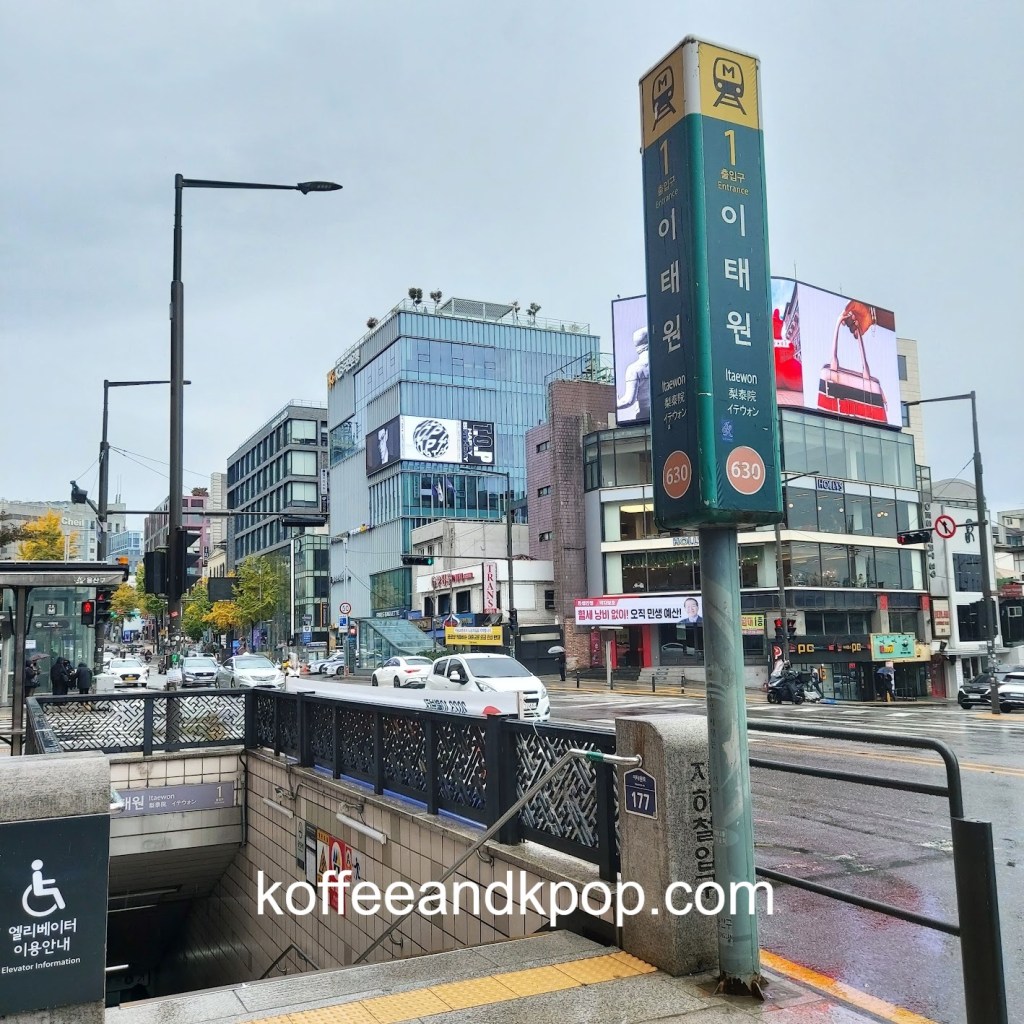
For many people, October 29th, 2022, was the first Halloween since the Covid pandemic started that people were free to gather on the streets without social distancing and masking requirements. Celebrating Halloween in Itaewon, a very foreigner-friendly and touristy area of Seoul, simply made sense, as it had before the pandemic.
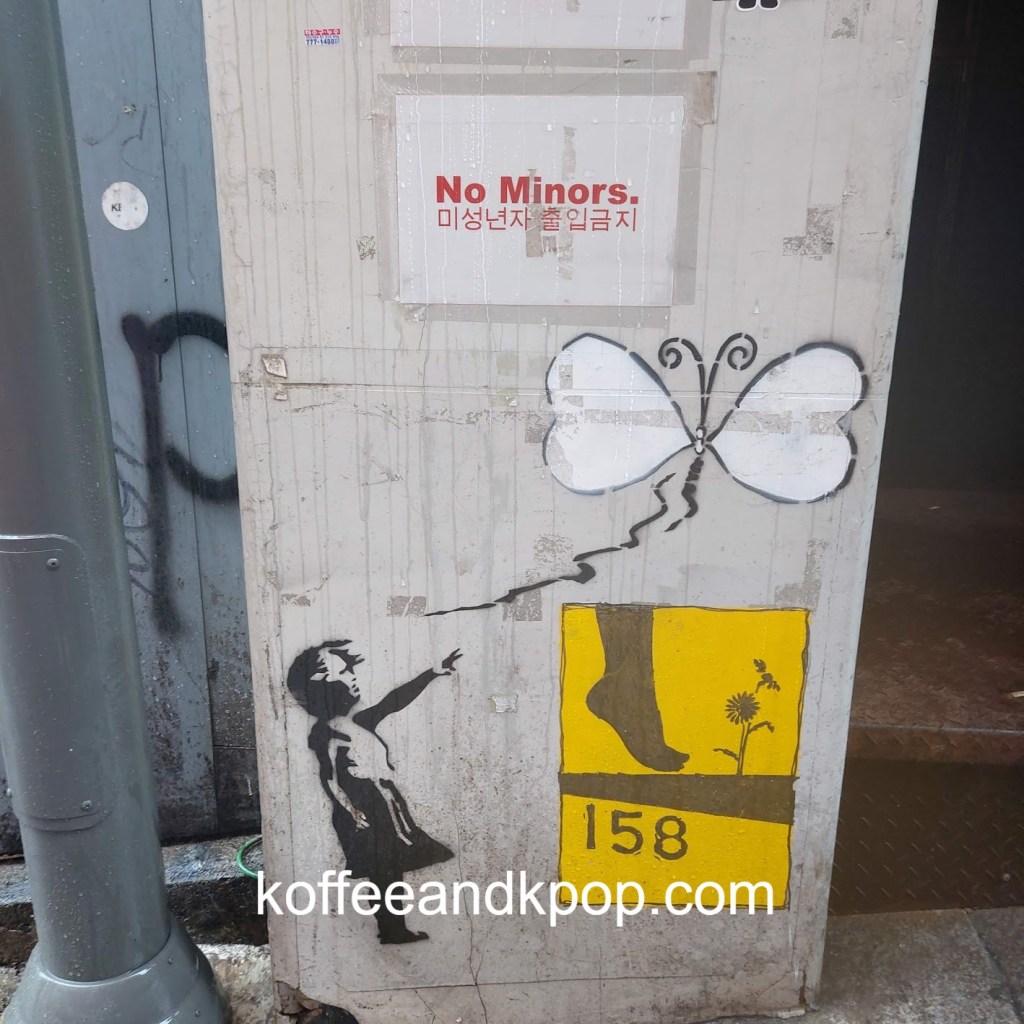
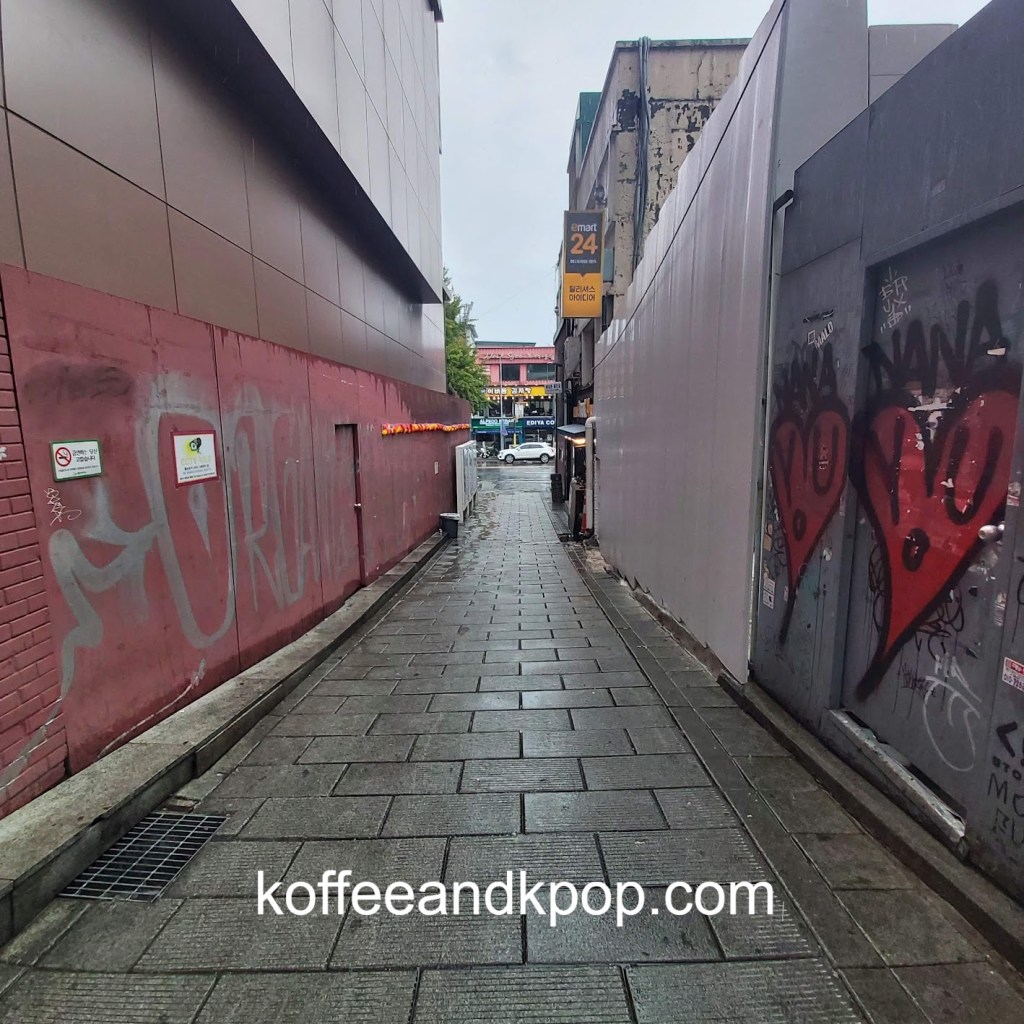
The first 119 emergency call from Itaewon came at 6:43 pm. The caller requested crowd control, saying things were getting unruly, particularly in the small alley next to the Hamilton Hotel. Itaewon is constructed of many tight alleyways on steep inclines, and this particular alleyway led from the main drag of Itaewon down to Exit 1 of the Itaewon subway station. Over the next several hours, close to 80 emergency calls would be made, each increasingly desperate, some from voices that would never be heard again.

Halloween wasn’t an event that was organized by any specific group. People just gathered to drink and dance and party. Because of this, the Seoul government didn’t deploy much police presence, even though it would later be discovered that they were aware that the crowds in Itaewon would be large and pose a safety risk. (A police officer, as well as a city government official in the safety support division, would take their own lives during the internal investigation that exposed a cover-up attempt.) Only 137 police officers were in Itaewon that night, and as videos started filtering through social media, one video shows a solitary officer trying his best to redirect people and ease the crowding just hours before the tragedy.
158 people would lose their lives that night. A high-school survivor who lost several of his friends would take his own life later, bringing the total to 159. It was a terrible accident and it could have been prevented. Thousands of people are suffering from PTSD from the event, and Itaewon as a cultural hub has been slow to see business pick up again.

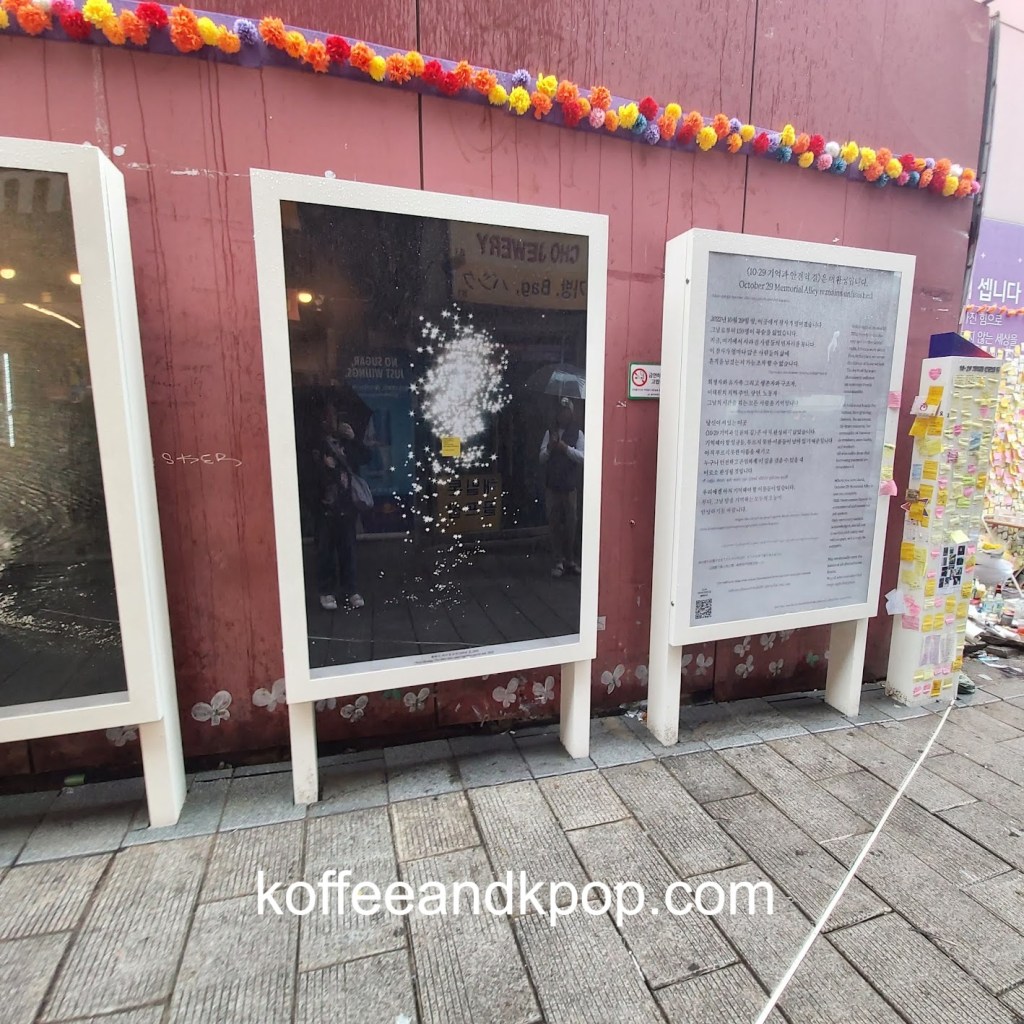
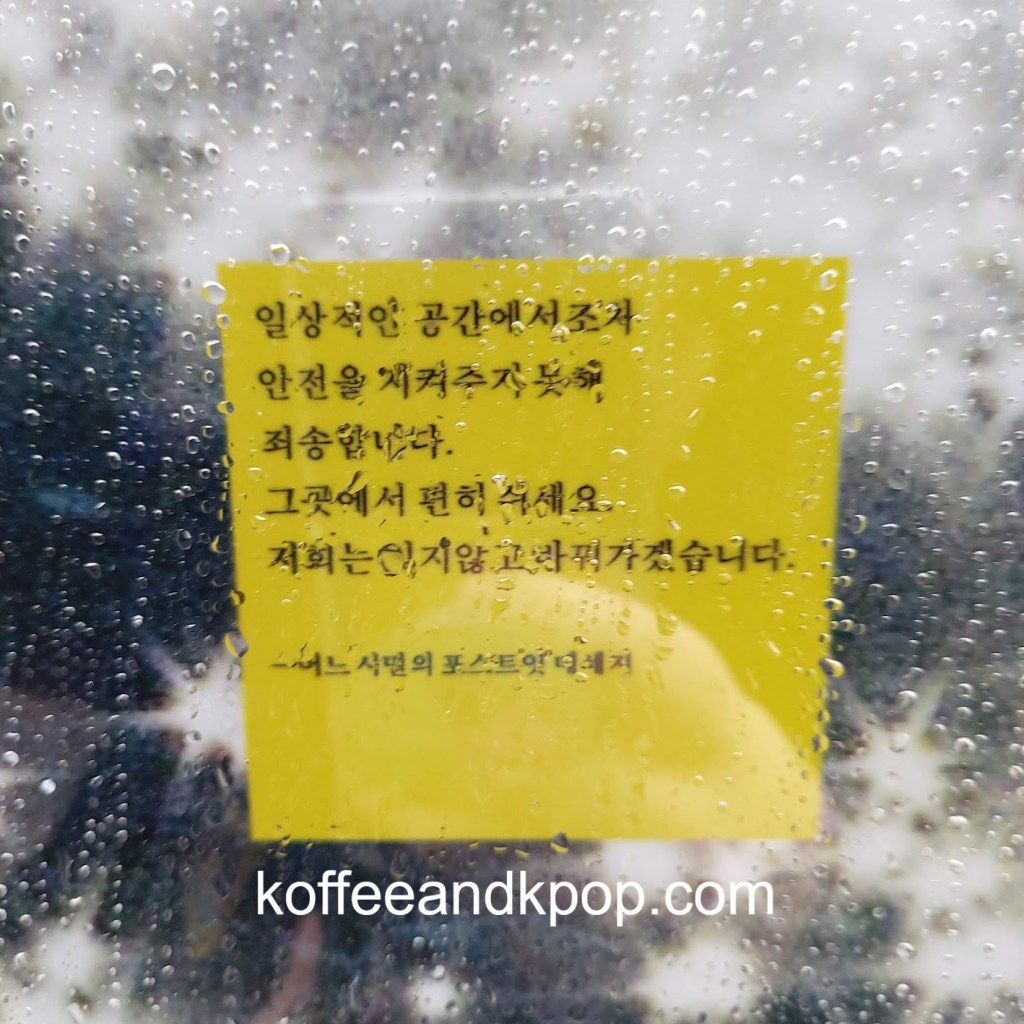
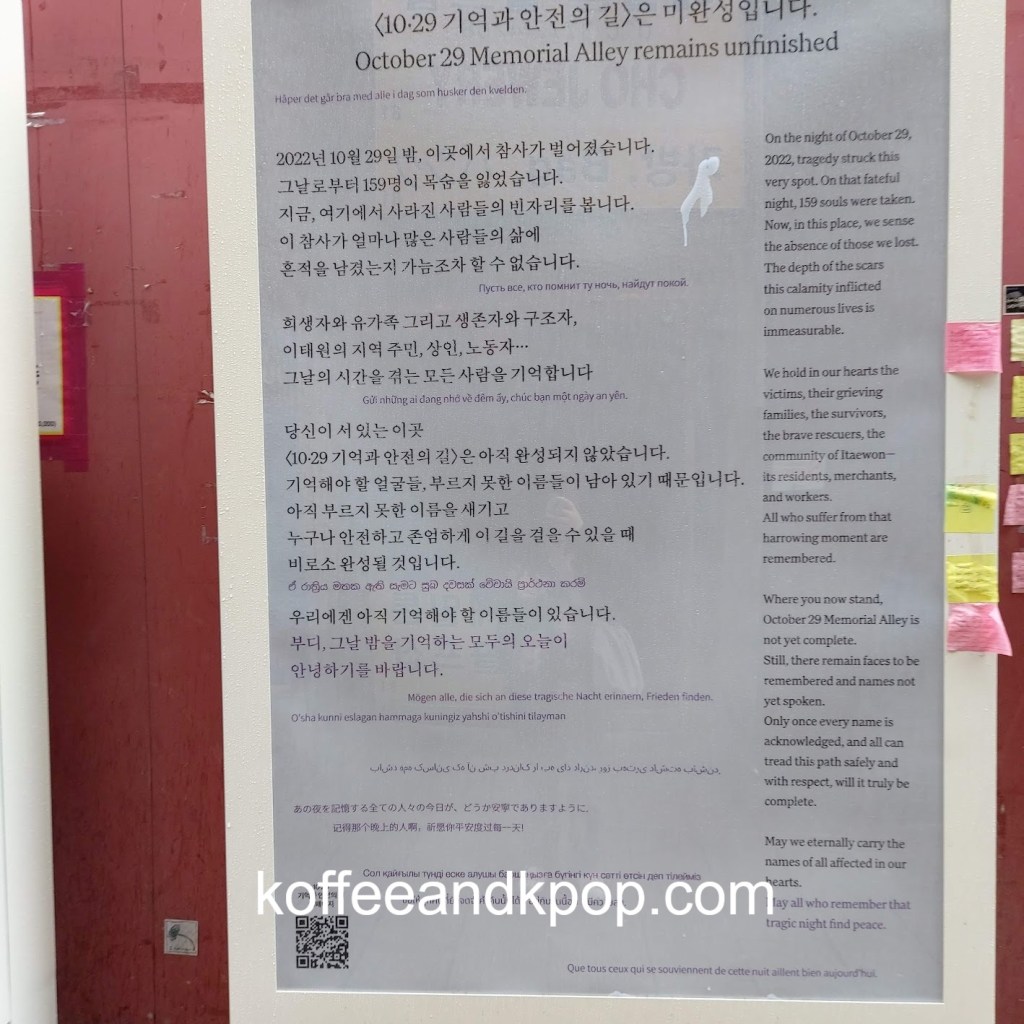
English transcription of the fourth panel:
On the night of October 29, 2022, tragedy struck this very spot. On that fateful night, 159 souls were taken. Now, in this place, we sense the absence of those we lost. The depths of the scars this calamity inflicted on numerous lives is immeasurable.
We hold in our hearts the victims, their grieving families, the survivors, the brave rescuers, the community of Itaewon–its residents, merchants, and workers. All who suffer from that harrowing moment are remembered.
Where you now stand, October 29 Memorial Alley is not yet complete. Still, there remain faces to be remembered and names not yet spoken. Only once every name is acknowledged, and all can tread this path safely and with respect, will it truly be complete.
May we eternally carry the names of all affected in our hearts.
May all who remember that tragic night find peace.
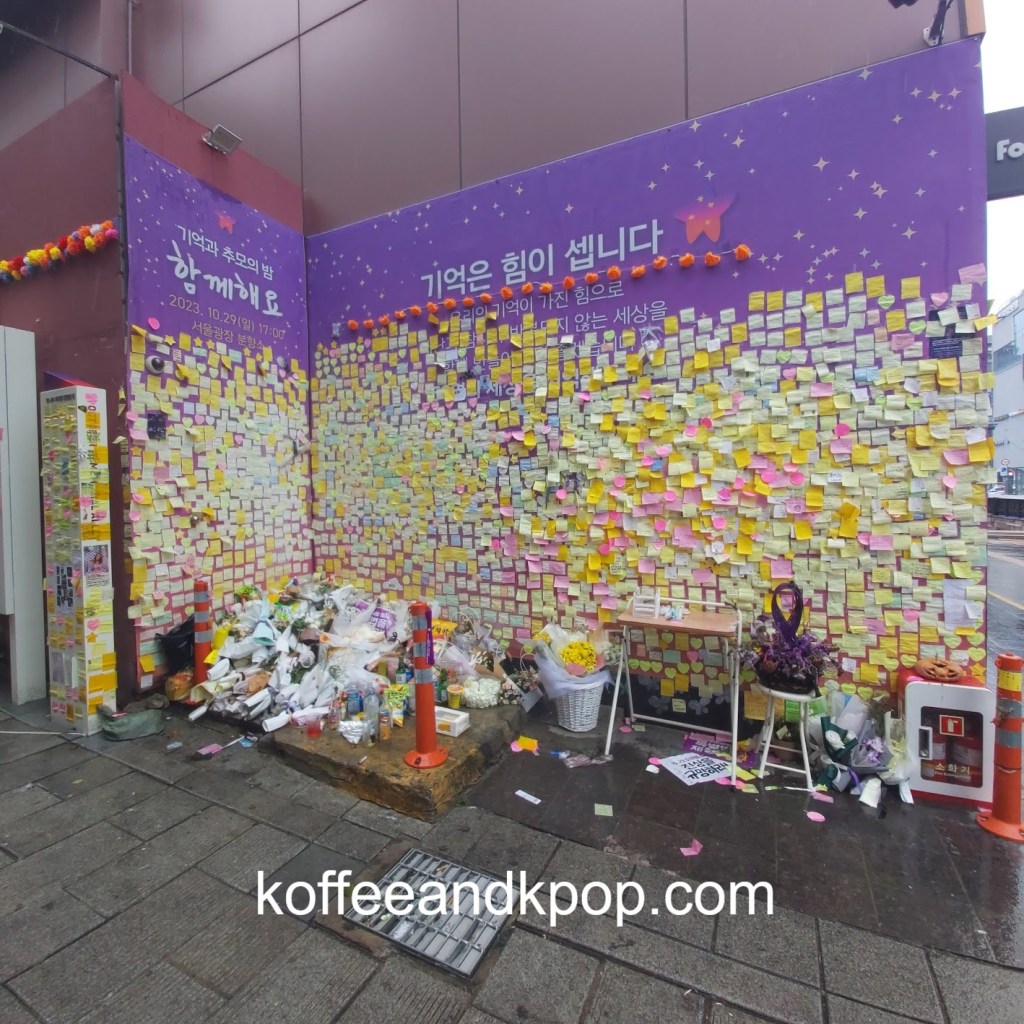
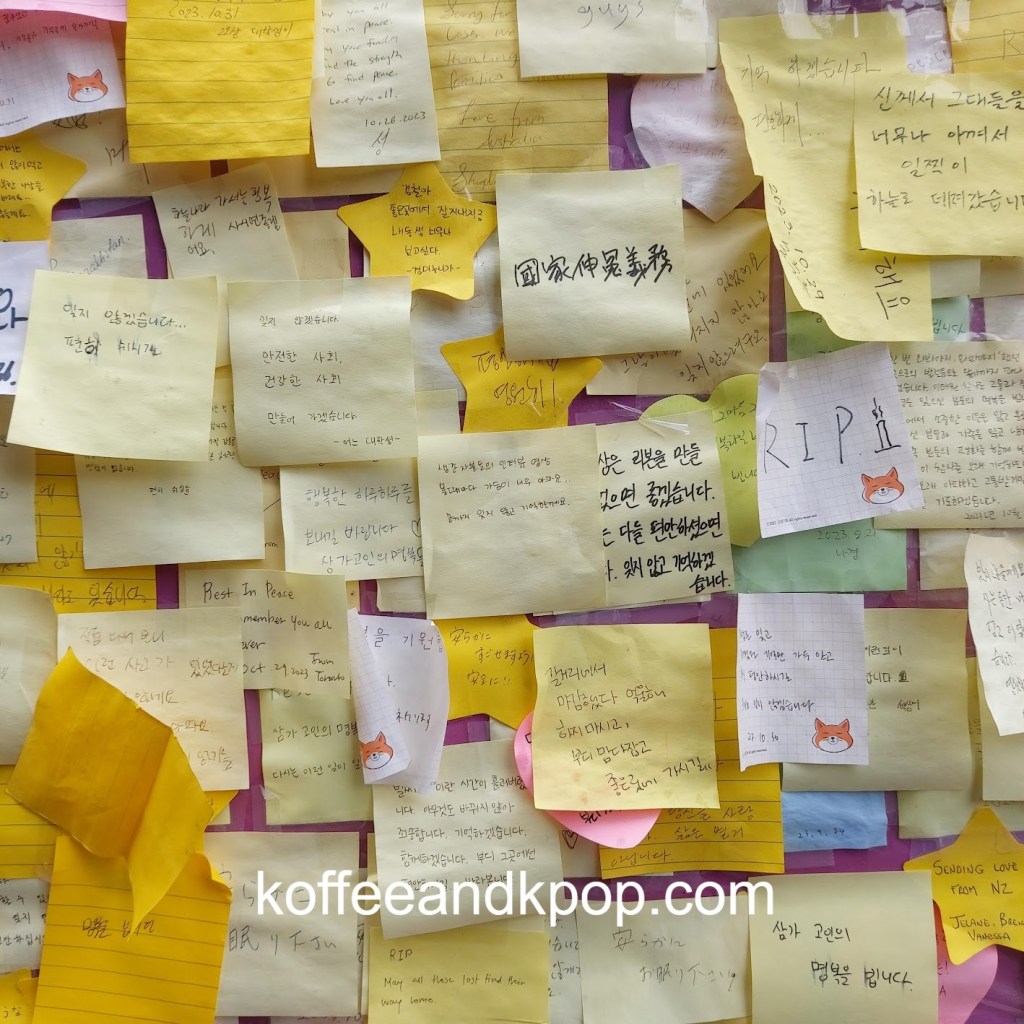
A year later, the makeshift memorial, now with some permanent pieces, still stands. Multi-colored post-it notes flutter in the rain with notes written in languages from all over the world. Rain drops drip down the necks of bottles of soju and collect on the plastic packaging of shrimp chips. The pile of fresh flowers laid by a corner of the memorial is a foot deep.
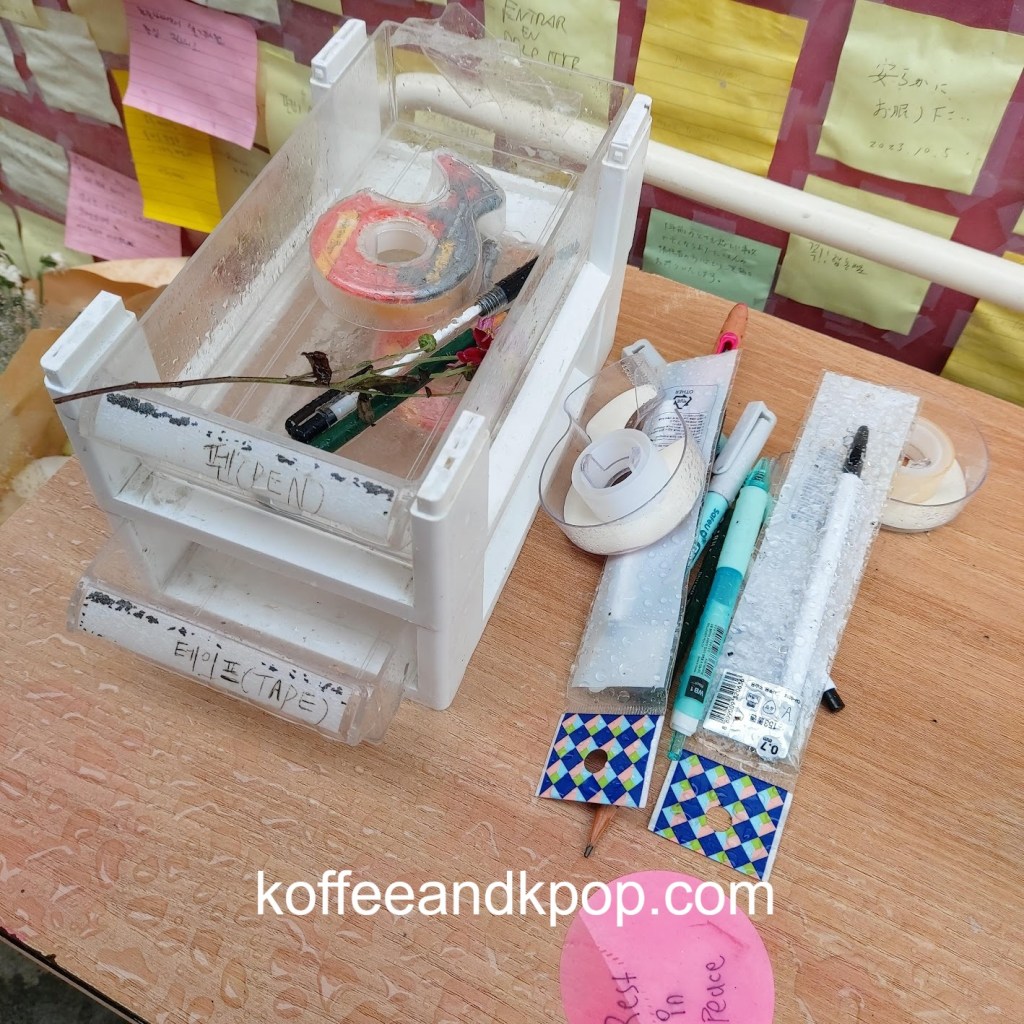
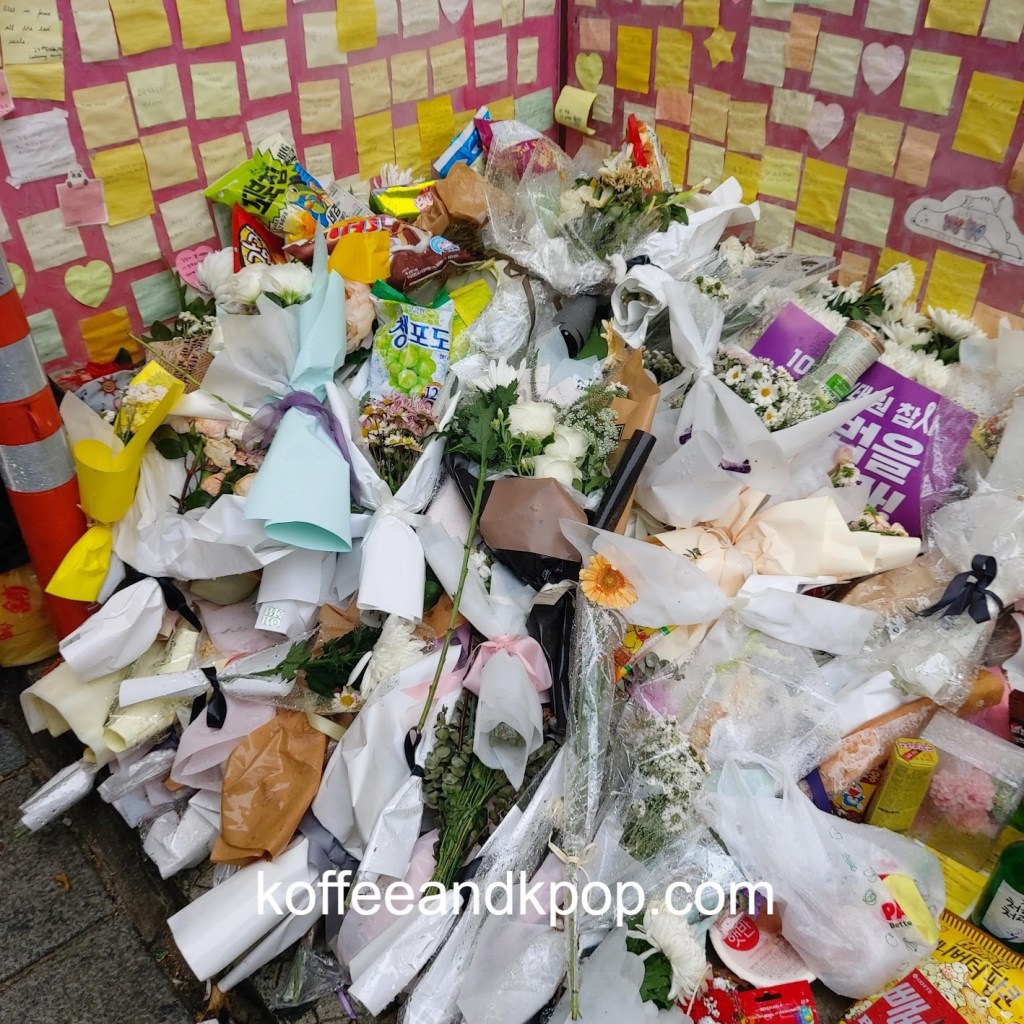
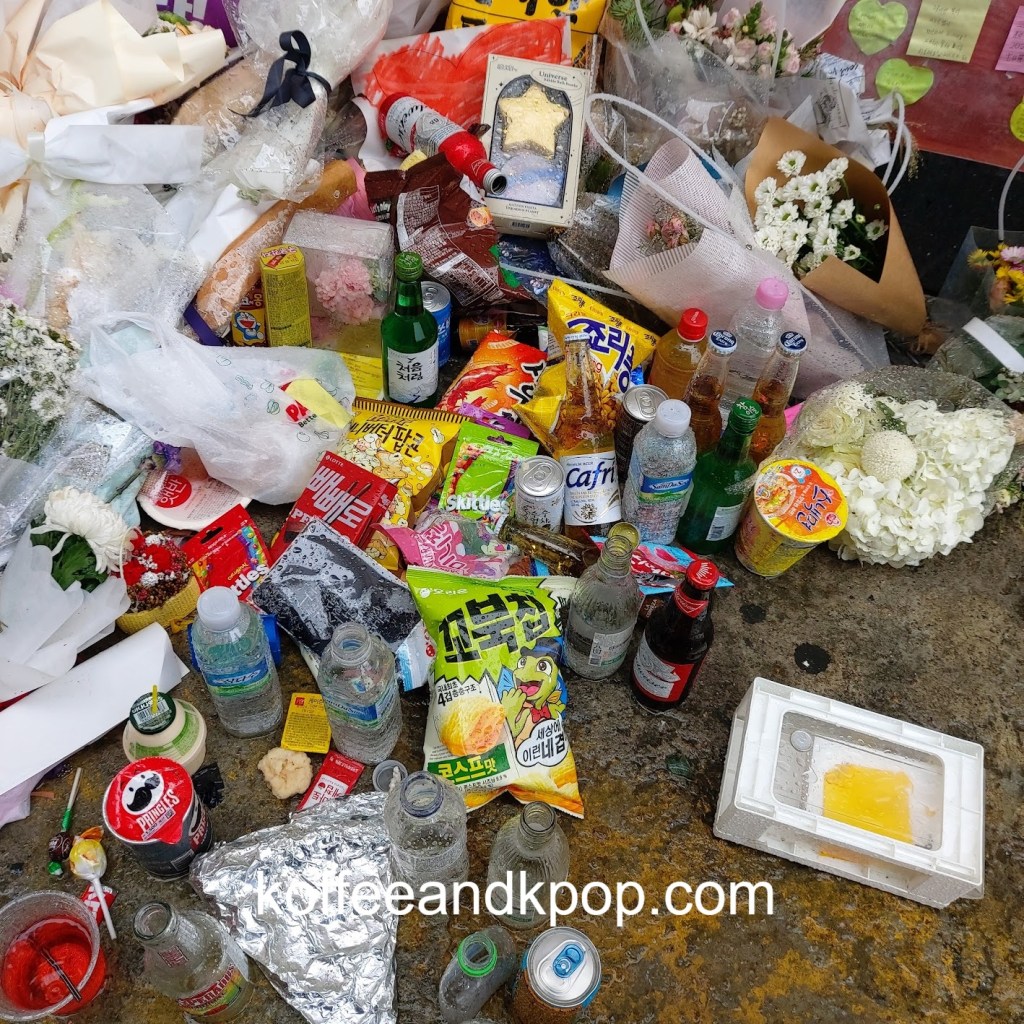
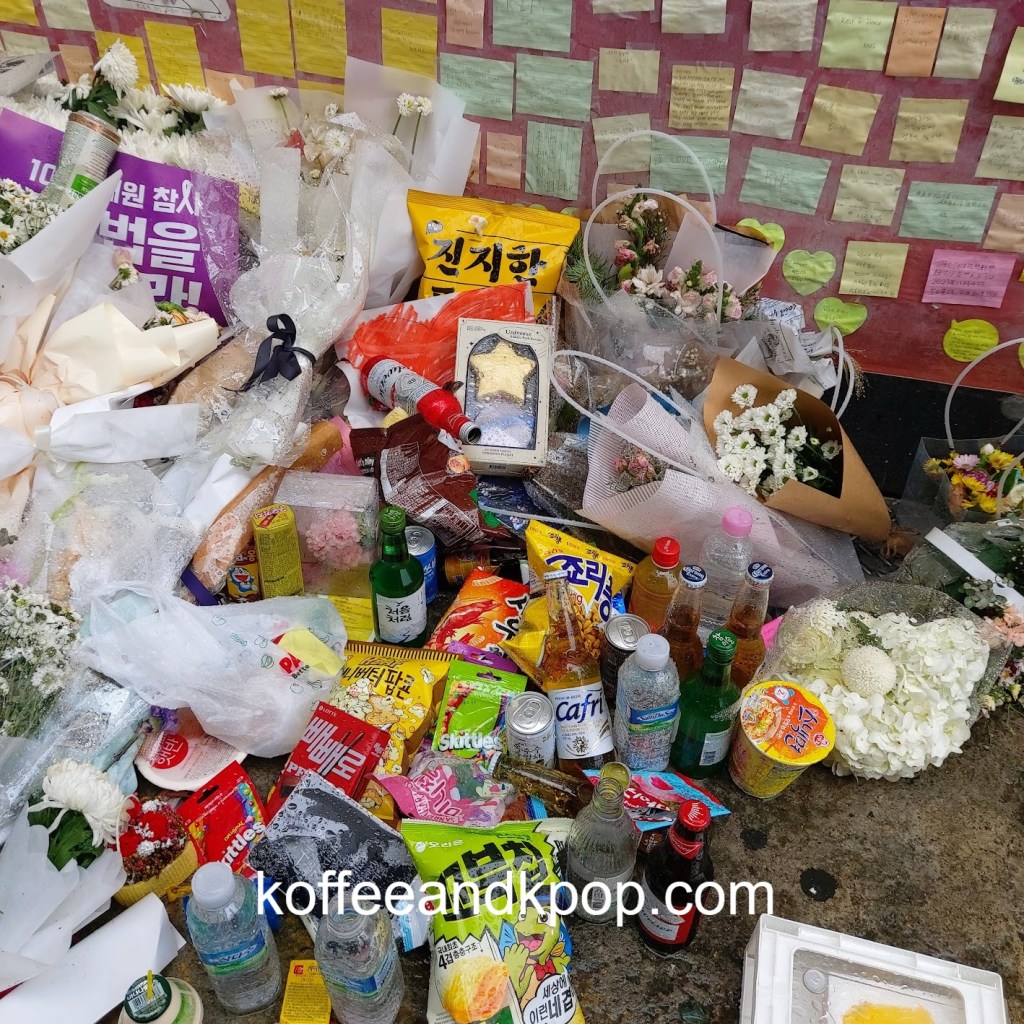
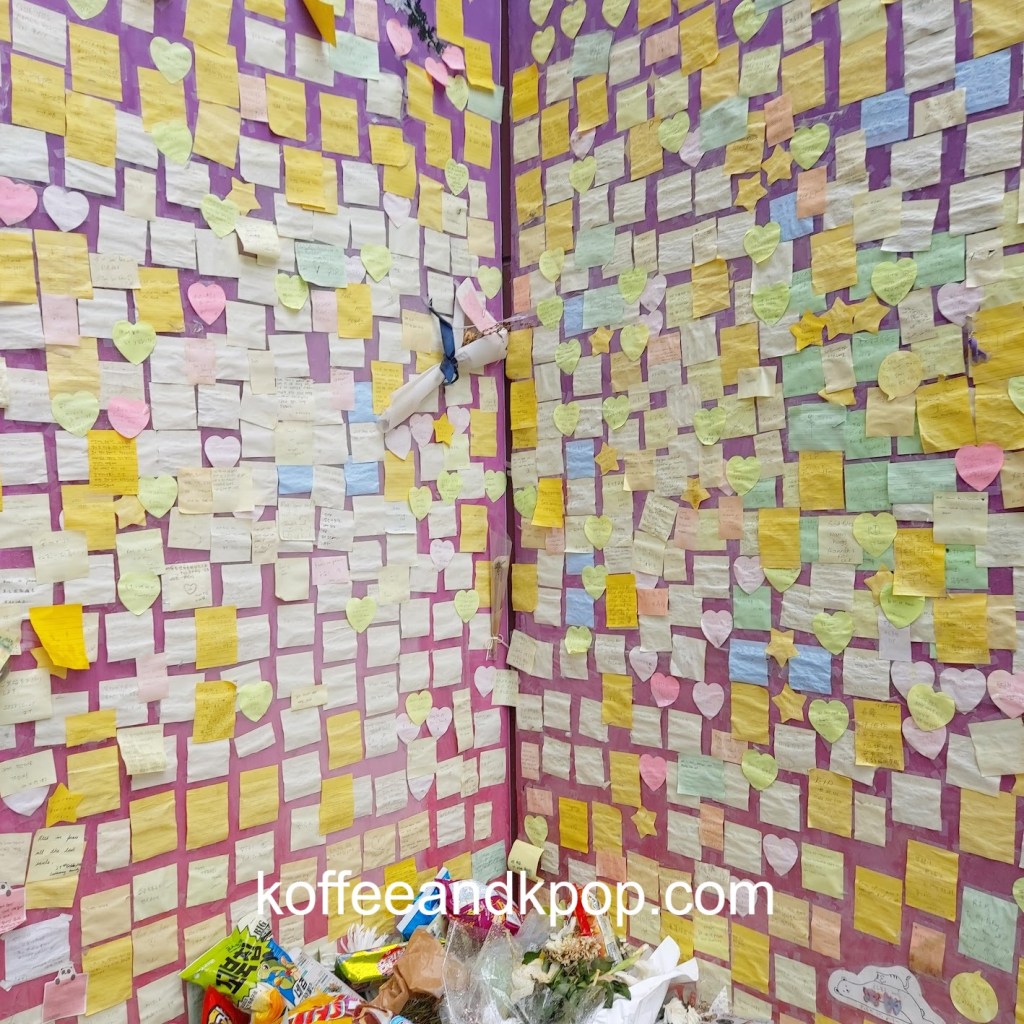
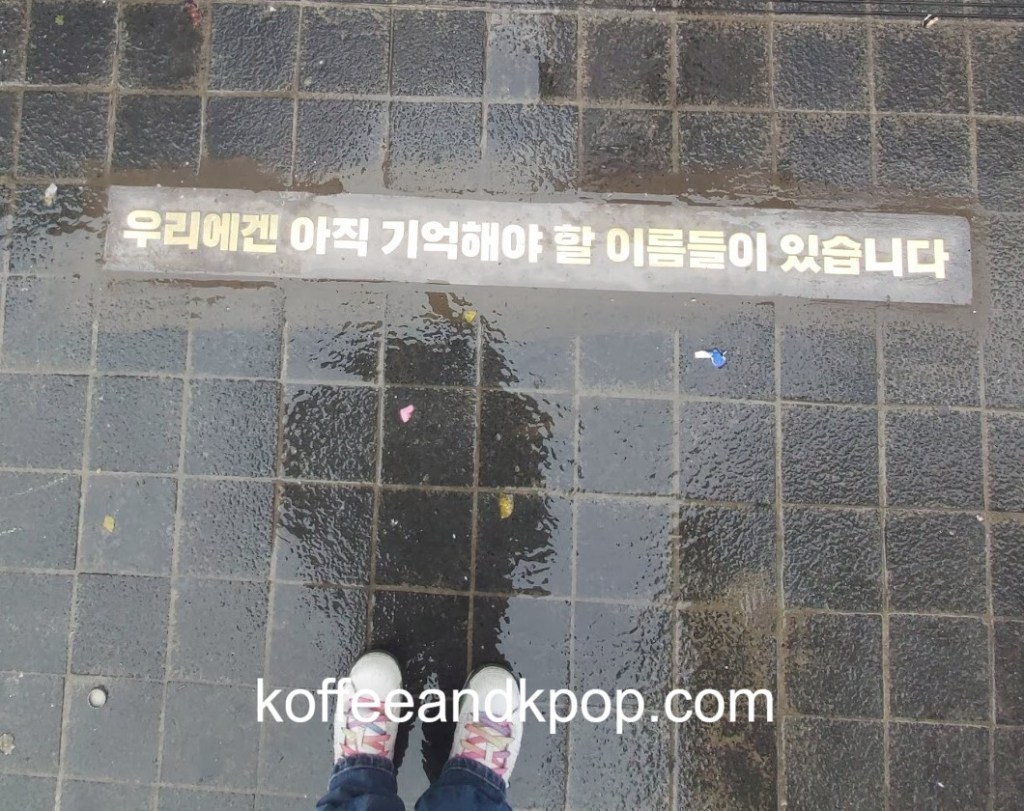
The manhole cover sits, unassuming, silent, at the end of the alleyway. Only this time, just in front of it, is a phrase written in gold font into the street tile:
우리에겐 아직 기억해야 할 이름들이 있슴니다
“We still have names to remember”





 Koffee & Kpop
Leave a comment