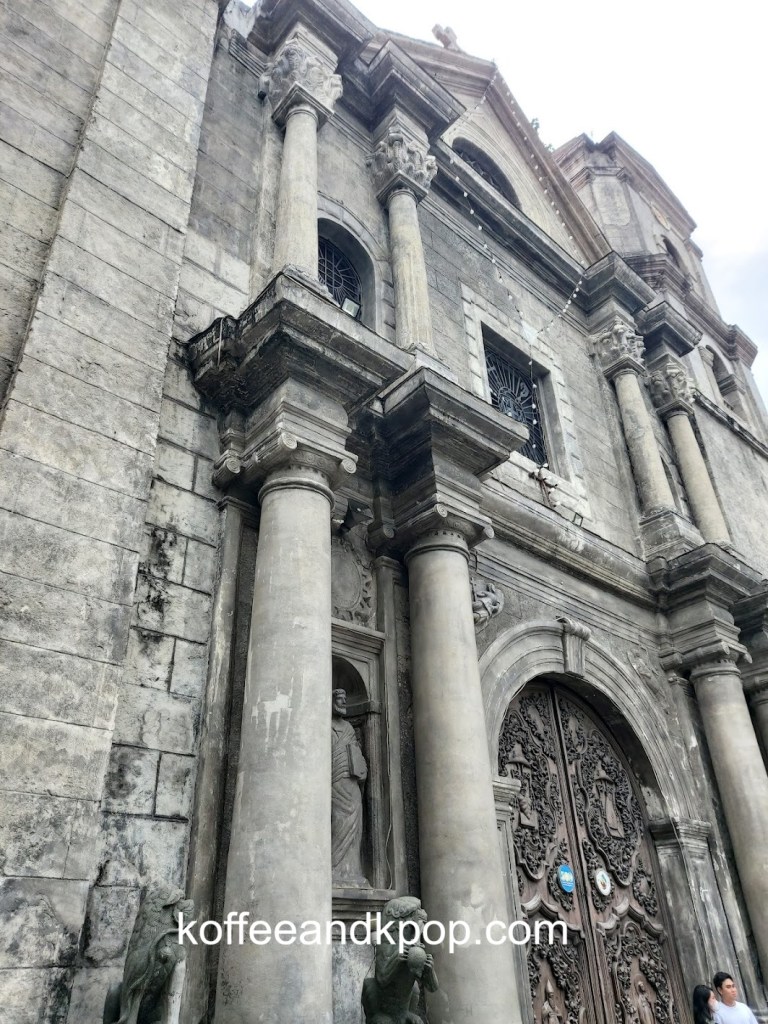
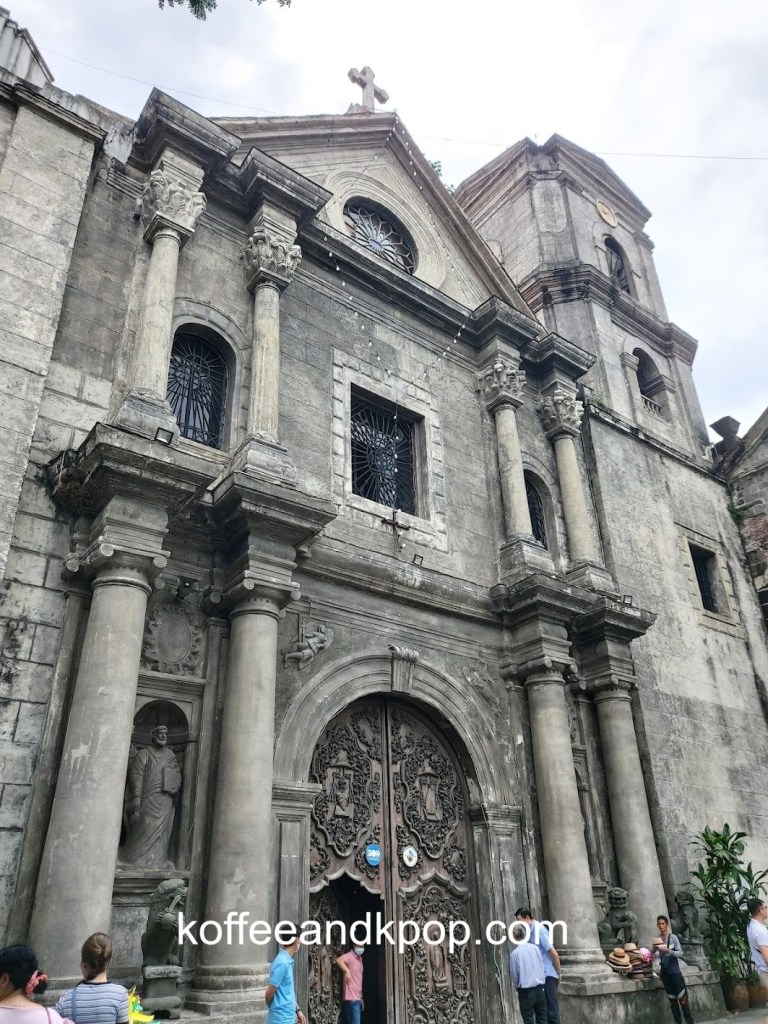
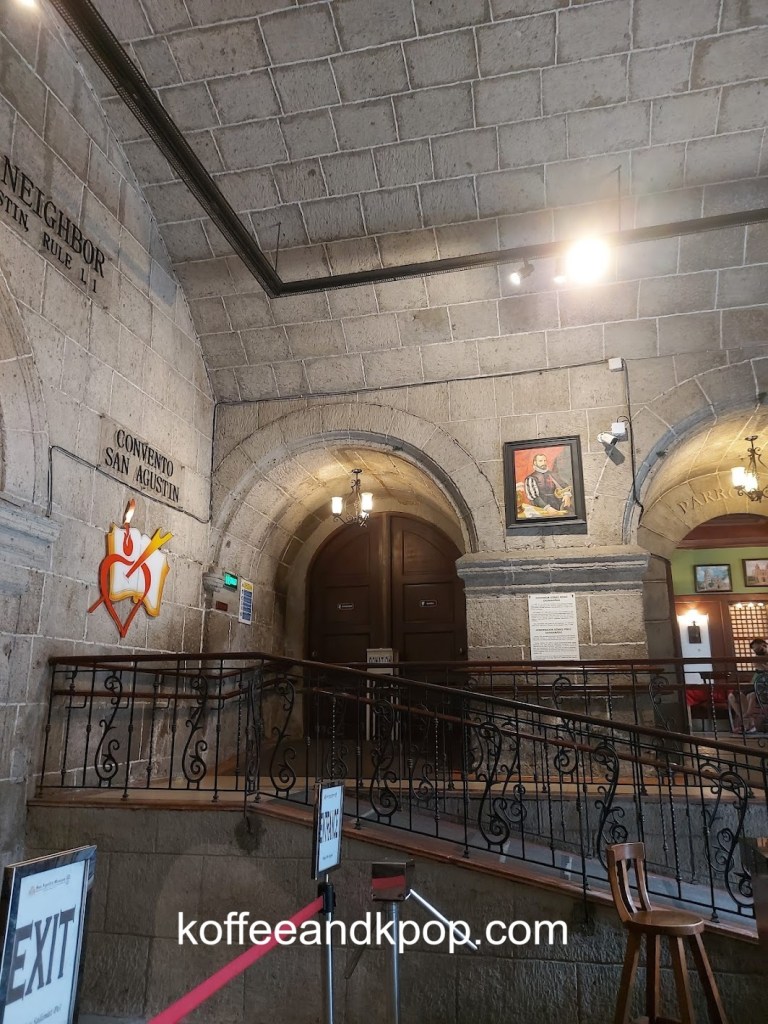
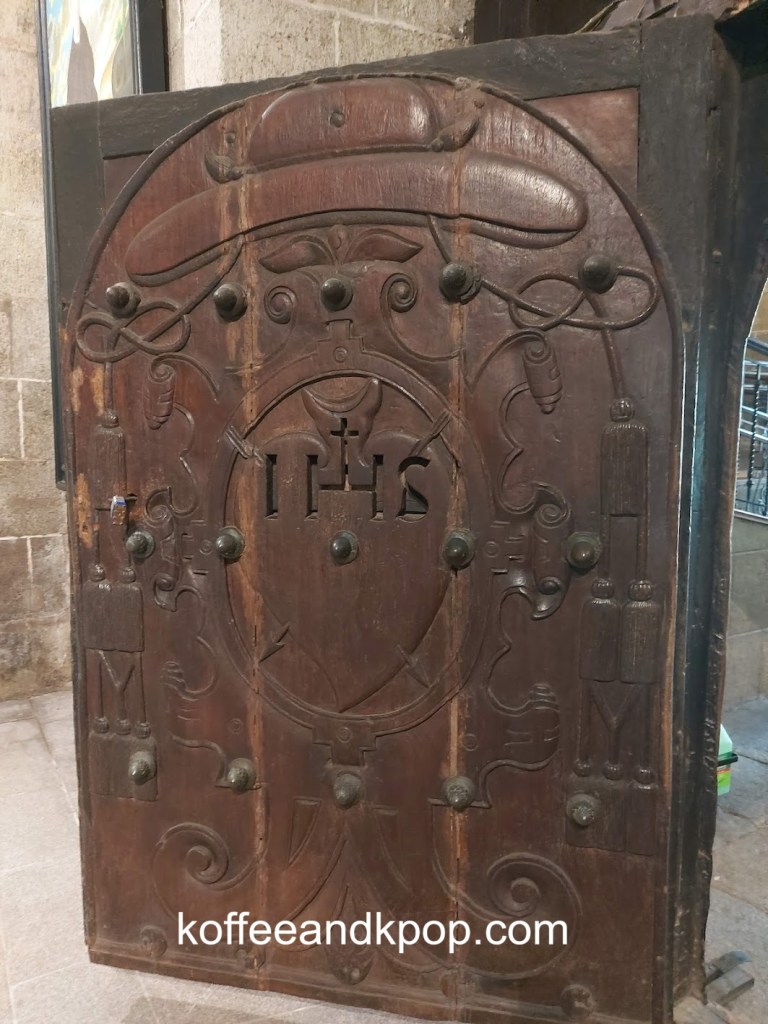
Located in Intramuros, Manila, Philippines, is the historic Roman Catholic church San Agustin. Built in 1607, it’s the oldest stone church in the Philippines. It was designated as a World Heritage Site in 1993. It’s actually the third Augustin church on the site, as it had previously been burnt down twice. The third and present church was built with stone in 1586. It has a rich and interesting history, having served as a hospital for those affected by an earthquake in 1863 and a concentration camp during the Second World War. Like many buildings in the Philippines, the architecture of the church comes from the Spanish colonial period, when baroque architecture was popularized. It was the only structure that remained intact within Intramuros after the Liberation of Manila in 1945. It is often referred to as one of the most beautiful buildings in the Philippines and now serves as a museum “administered by the Augustinian friars of the Province of the Most Holy Name of Jesus of the Philippines.”
A note: I am not, nor was I raised Roman Catholic and I have done my best to accurately describe the photos below. I didn’t think to take pictures of the information cards (if they existed) so I may very well be wrong in naming and giving background info on some of the saints. Please feel free to leave information and/or comments correcting me as I’d love to learn more.
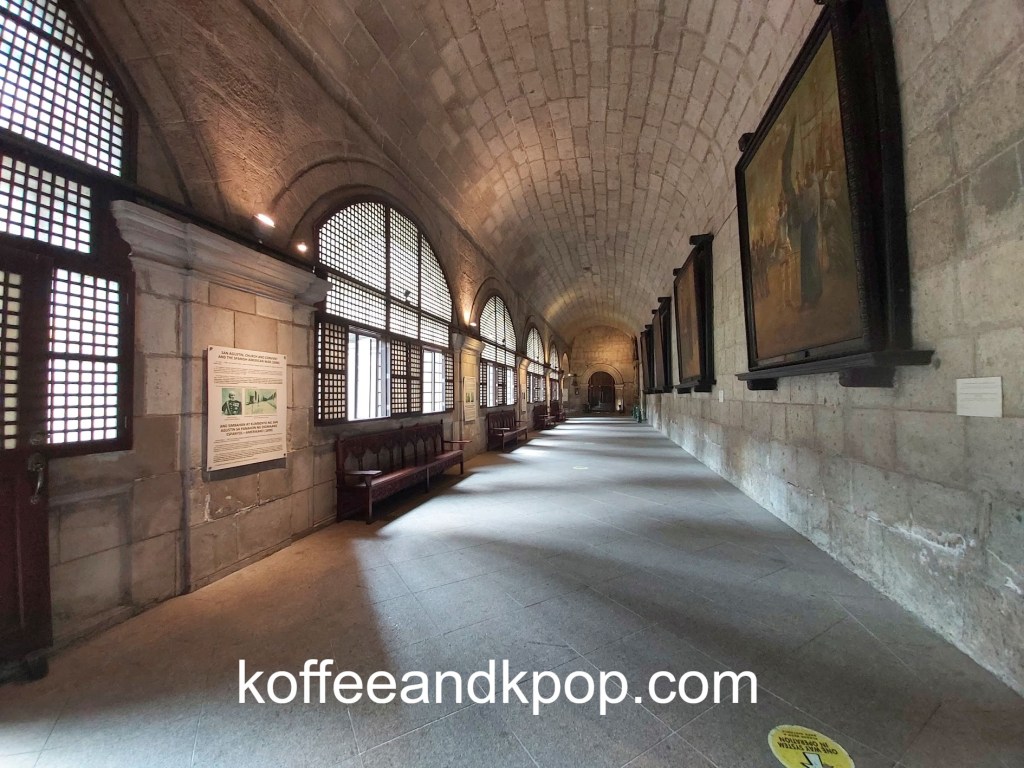
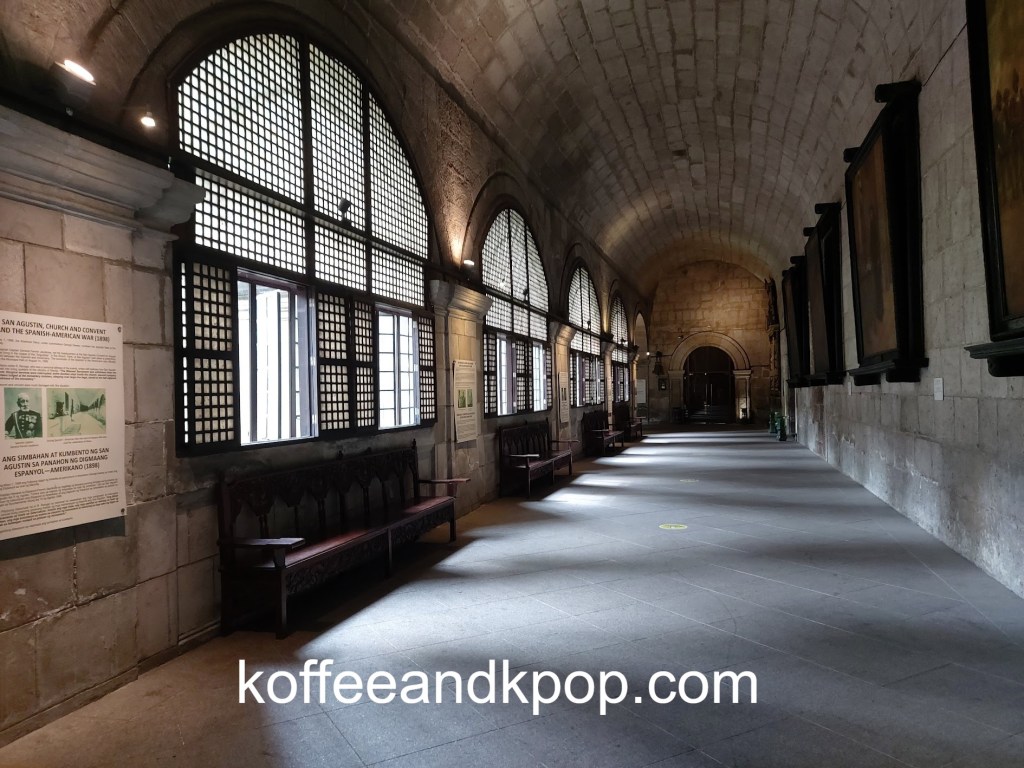


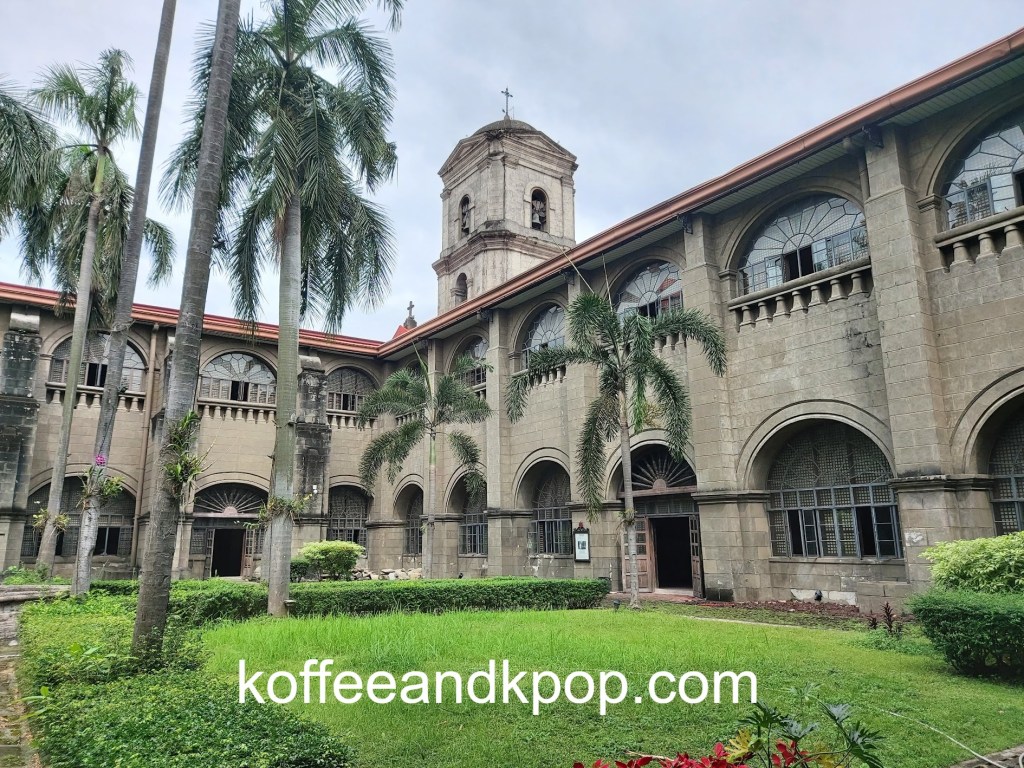


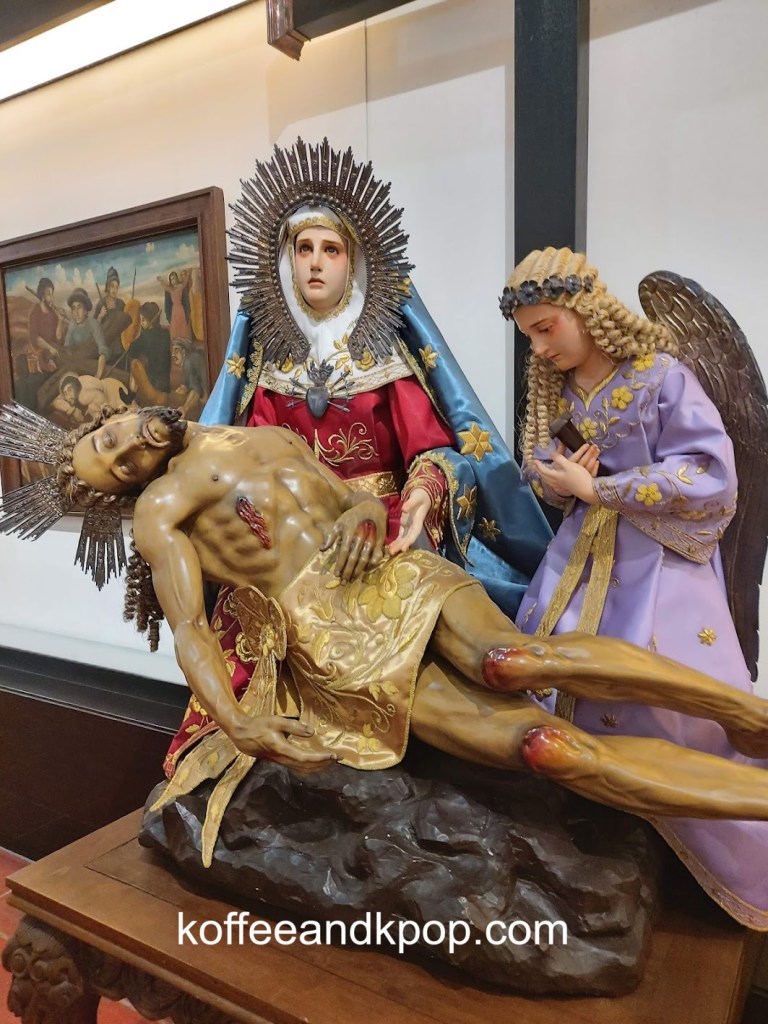


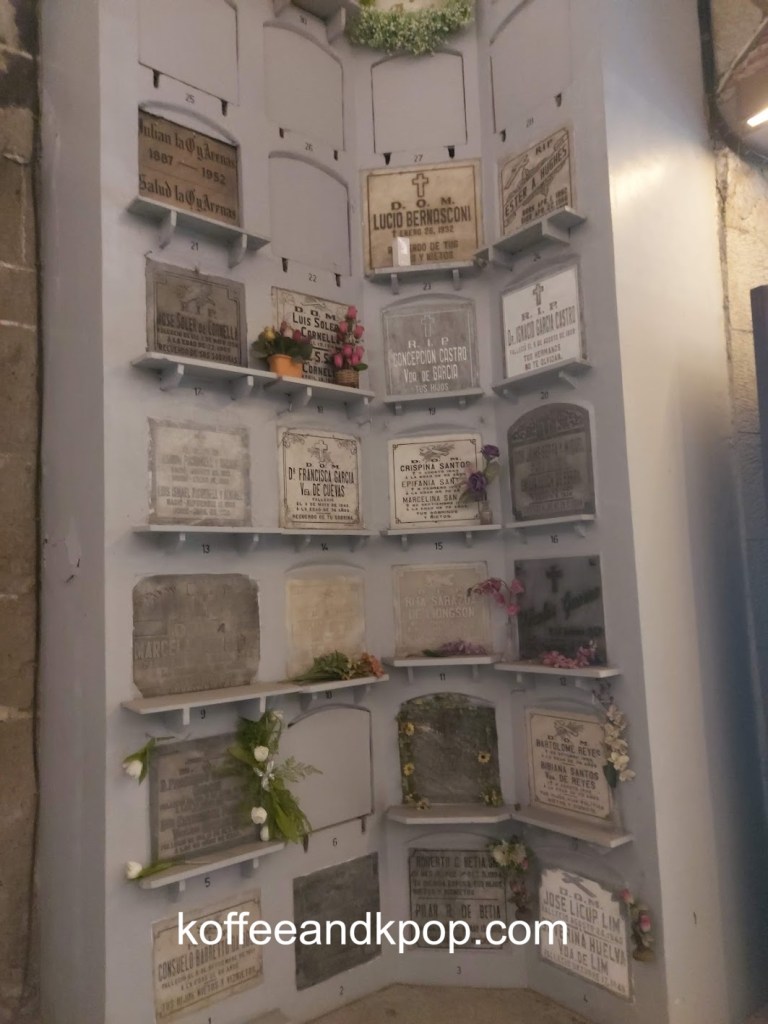

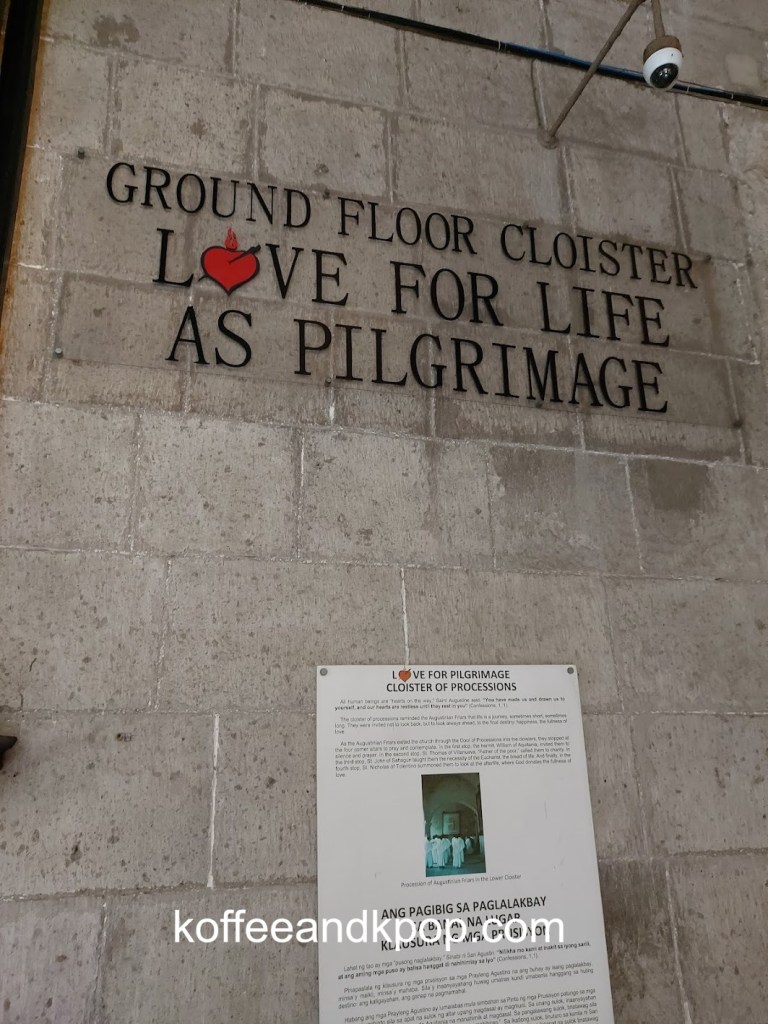

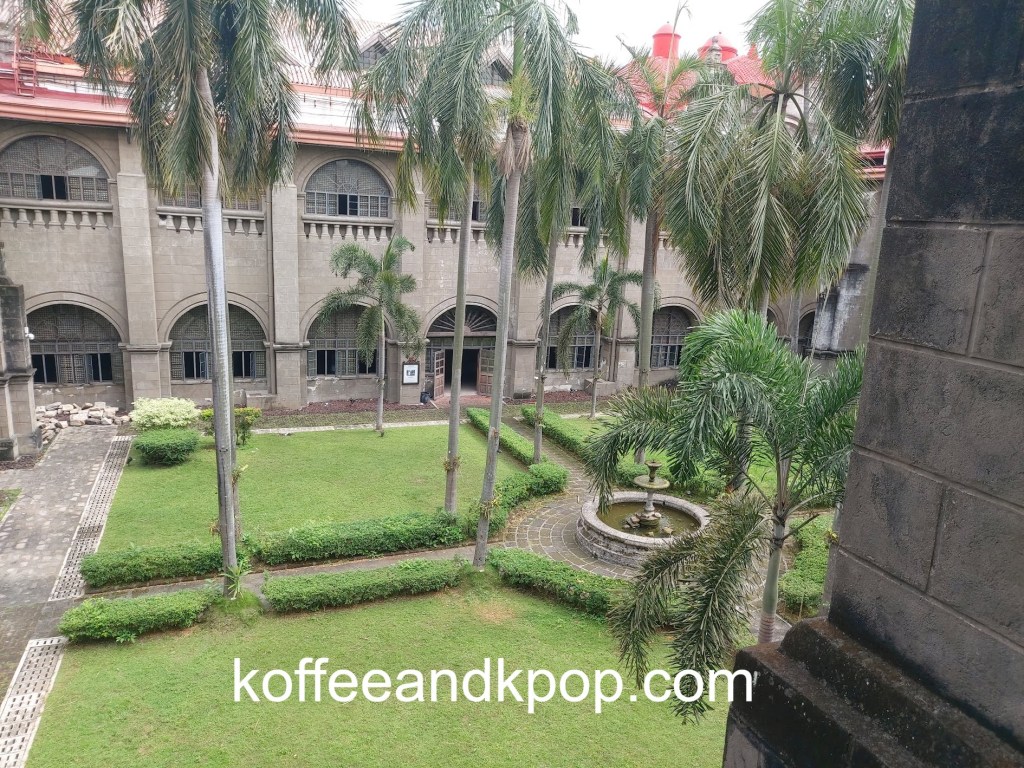

Below are my favorite three images.
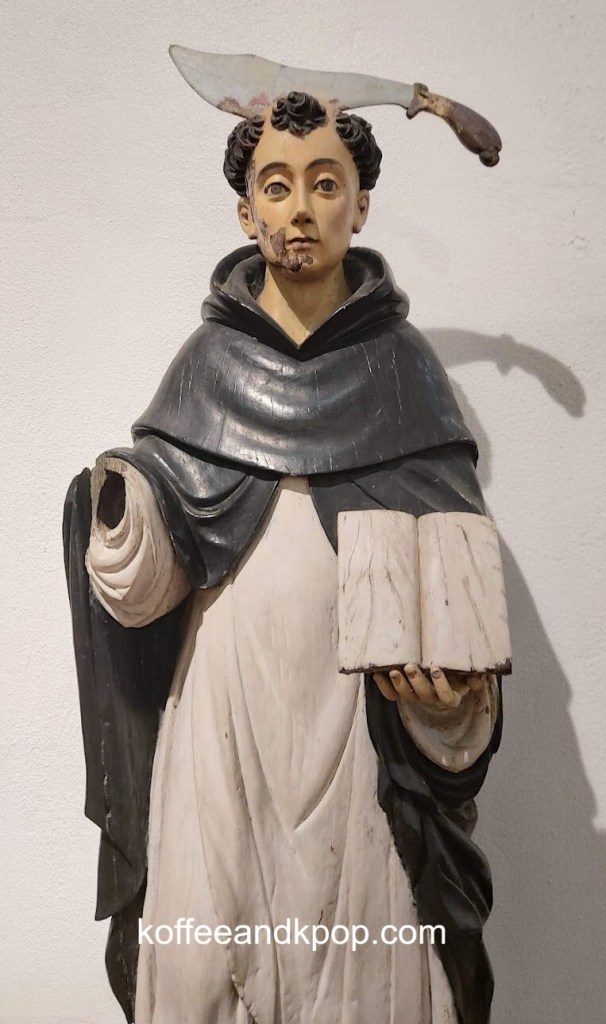
This muted black, white, grey and beige statue is Saint Peter Martyr. He has a cleaver embedded into his skull to show how he was assassinated, an open book in his left hand, and his right arm is raised but his hand is missing. He has the record for fastest canonization, being canonized a mere 11 months after his death. His assassin, who was hired by a group of Cathar Catholics who were unhappy with what Saint Peter was preaching, Carino of Balsamo, fled to a Dominican monastery where he confessed his evil deeds and later became a lay brother who was eventually beatified by the Catholic Church. (From Wikipedia: “Beatification (from Latin beatus, “blessed” and facere, “to make”) is a recognition accorded by the Catholic Church of a deceased person’s entrance into Heaven and capacity to intercede on behalf of individuals who pray in their name.“)

This muted black, white, grey, and beige statue is Saint Rita of Cascia. She is holding a skull in her left hand and her right arm is raised but whatever it was she was holding (probably a crucifix) is missing. She is known as the Patroness of Impossible Causes which includes conditions such as “sterility, abuse victims, loneliness, marriage difficulties, parenthood, widows, the sick, bodily ills and wounds“. She was married off at the age of twelve to a man with a quick temper and had two sons. Her husband was later murdered by a member of a feuding family, and her sons died of dysentery. After all this, she attempted to the join the monastery but was turned away because she wasn’t a virgin and they thought having her a part of the monastery would bring unnecessary gossip, due to her past (specifically, that her husband was murdered). It was only at the age of 36, after reconciling her family with the family of her husband’s murderers, that she was admitted to the monastery. (Legend says that she actually levitated into the monastery.) After she died, her body was said to be “incorrupt,” meaning that each time they exhumed her remains, they were intact and had not deteriorated, including the partial Stigmata on her forehead.
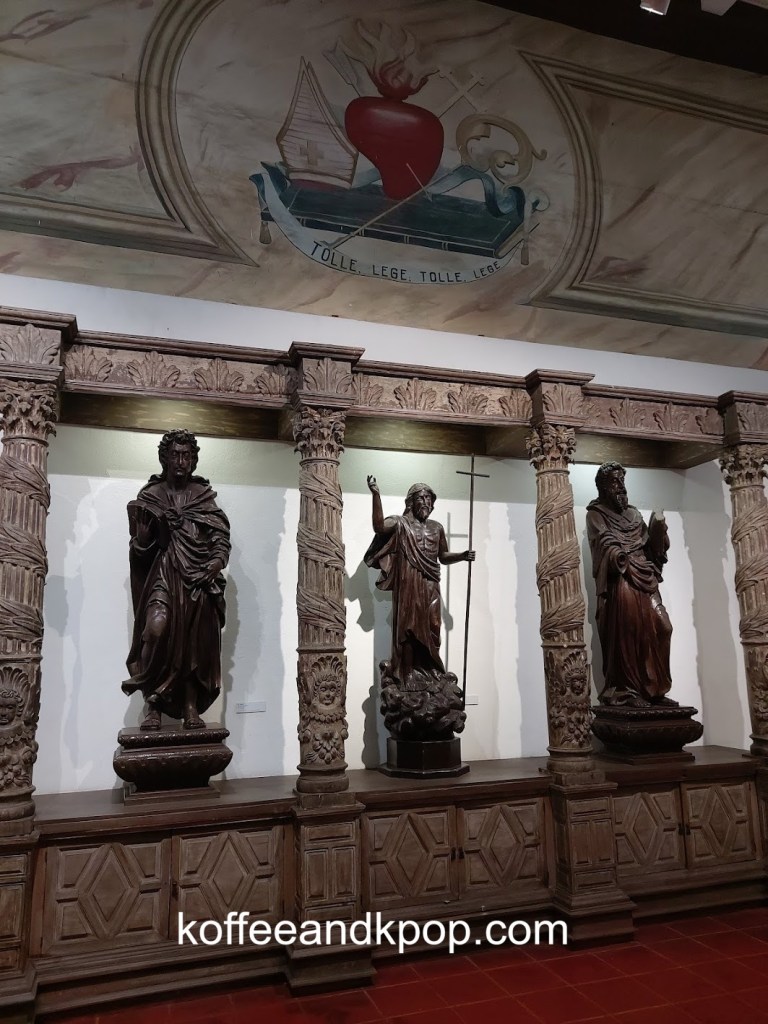
On the wall is an image of a hat, a flaming heart with a sword through it, a crucifix, and something else I can’t make out. They are sitting atop a book and underneath the Latin words, “Tolle, lege, tolle, lege” are written. Underneath are 3 statues: the first of a young man in flowing robes holding an open book, the second a very thin man wearing a simple robe that exposes his chest holding a large cross, and the third an older man wearing robes with a missing extended right hand and holding what appears to be an open book. I believe all of these statues are of Saint Augustine in what is known as his “Three Conversions.” Saint Augustine first converted at age 31, and had heard the voice of an infant say, “Tolle, lege, tolle, lege,” which means “Take up and read, take up and read” in Latin. This conversion would be considered the first (intellectual) conversion, where we see Saint Augustine taking up intellectual pursuit of God and illustrated in the first statue as him being a young man holding a book. The second conversion is considered a moral conversion, or changing the way you live your life. This is illustrated in the second statue where Saint Augustine has started to preach to others. The third conversion is spiritual, which is represented by the third illustration where he is now an older man having fully given his life to God.
You can read more here and here. I should note that I am no scholar, nor am I a Catholic, but I do believe that these three statues could very well illustrate Saint Augustine’s three conversions, and I love the phrase “tolle, lege, tolle, lege” as having been the jumping point for his religious journey. I have never come across the idea of the “three conversions” and need to look into it more because I feel like it’s very apt–we go from seeking the truth, to realizing the truth, to living the truth.
But enough of this religious talk. Here’s a video of the fountain in the inner courtyard and its lovely swimming turtles.
Wonder what a day in the life of a friar would be like? Wonder no more:

A poster in the San Agustin Church, titled, “One Day in the Life of a Friar at the San Agustin Convent in 1770” and written in English and Tagalog (written in the Latin alphabet).
“Usually, in all Augustinian convents, a friar is assigned to ring the bell, and call the community to the common gatherings, and remind the friars about the different activities they need to attend.
- 5:30 am Rising and toilet
- 6:30 am Prayer of Prime, Terce and Calenda
- 7:30 am Breakfast
- 8:00 am Prayer of Sext and Nones and Conventual Mass, that was sang
- 10:00 am Study of Moral Theology
- 11:00 am Lunch
- 12:00 nn Recreation
- 1:00 pm Rest in silence
- 2:00 pm Prayer of Vespers and Compline
- 3:00 pm Time for study
- 5:00 pm Prayer of Matins (except in Advent and Lent which were usually sung at midnight)
- 6:00 pm Dinner
- 7:00 pm Singing of Serotina, followed by mental prayer
- 8:00 pm Silence and night rest








 Koffee & Kpop
Leave a reply to 86-2683 – Nun with skull – Art-Chap-Enjoin Cancel reply