At the end of December 2024, a nearby higher speed commuter rail station opened. (Faster than a normal subway train, but not fast enough to be considered “high speed.”) Normally, I take a bus to Seoul Station and it takes me an hour. With GTX-A, however, my time would be 37 minutes, with the amount of time on the train being 12 minutes compared to 45 minutes on the bus.

I was actually nervous to take such a new form of transportation, but I needn’t worry. There were many signs showing the way to the GTX station, and since it is new, many employees wearing high-visibility vests with light sticks.
First, I took an escalator. Then I realized I would have to take yet another escalator, so I jumped behind a line of people waiting for an elevator that would take us down to B7, where the platform is located.
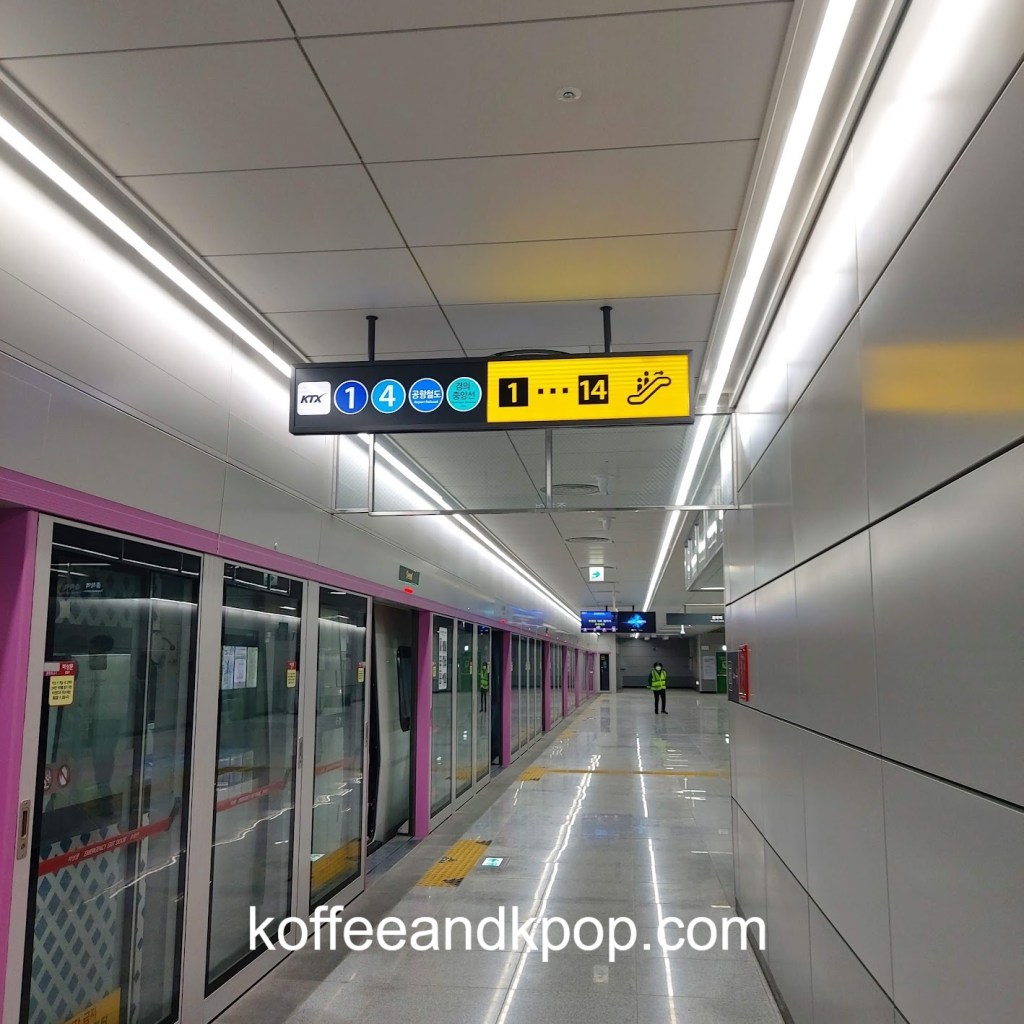
The station, being new, has that new-station smell. The first thing I noticed were that the open spaces along the platform were very large and wide compared to regular subway stations, so clearly there was some hopeful planning that the GTX would be taken by an increasing number of commuters.
It did, however, remind me a bit of The Back Rooms, which was a little unsettling. Would I ever get to my destination?

The train rolled up and I was surprised to see a large single door rather than two that open in the middle. It did that cool sci-fi thing where it moves away from the train before sliding open.

My car was pretty empty, as it was going into Seoul shortly after rush hour. There were pink seats for pregnant people, and the blue seats were for people with other needs (disabled, elderly, with children, etc.), while the white seats were for the rest of the unwashed masses. Technically, this is also something on subway trains, but it isn’t as clearly notated. Usually commuters reserve the pink seats for pregnant people, as well as the trio of seats at the end of each car for the elderly.


The train is fast. My ears popped several times because the train travels so deep underground. Within 12 minutes, however, I was at my destination.
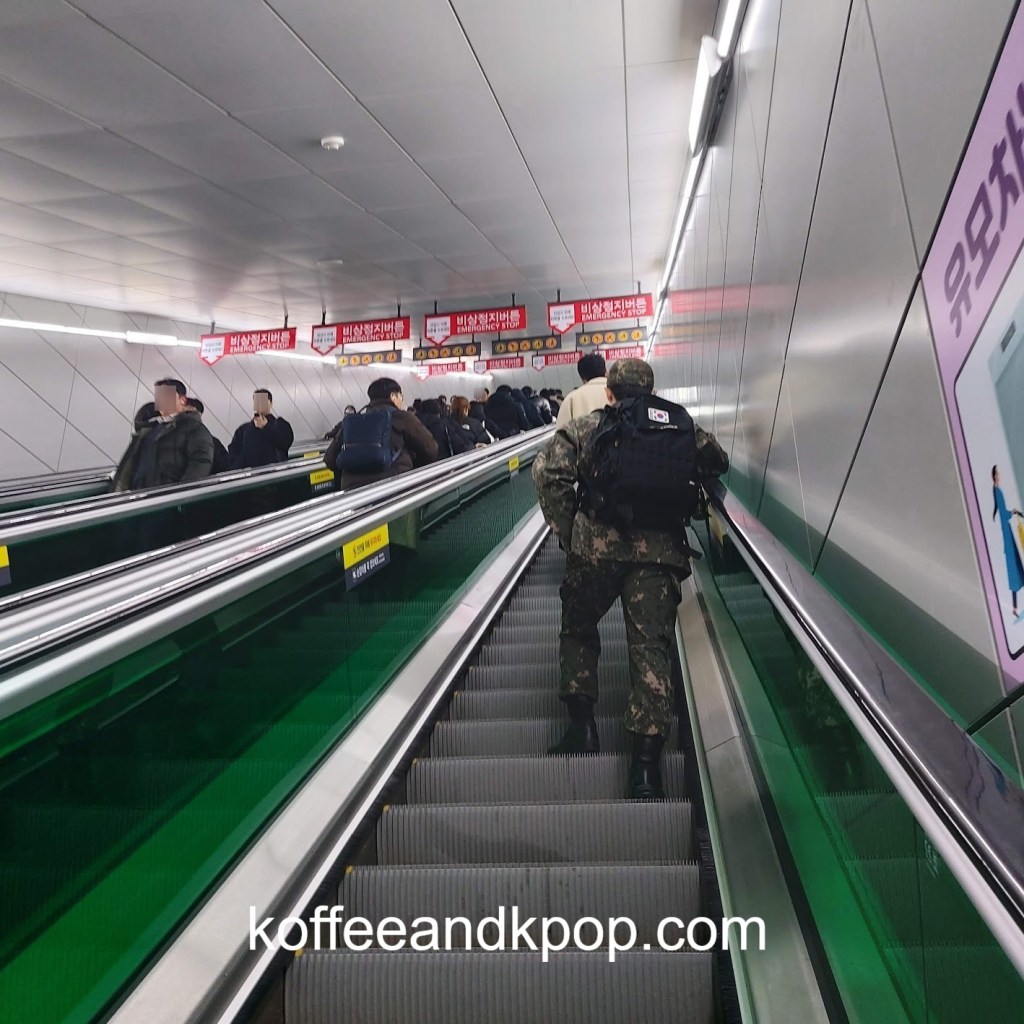
There were new escalators that were very long, with multiple emergency stop buttons along the sides. The pictures I took of the escalators are actually from two different escalators, which made me realize why there were so many people running for the elevators. I didn’t mind waiting on the escalators, however. They’re nothing compared to the escalator at Wheaton Station in Maryland.

Once inside the station, there were more large empty spaces that seemed creepy due to their cleanliness and lack of people milling about on their phones.
There was a lot of walking through Seoul Station to get to the exits, but it was fairly easy as signs are everywhere, both on signs hanging from the ceiling as well as painted on the floor. It took me around 8 minutes to reach my exit from the time I got off the train.


After my schedule, I backtracked to the bread store I passed on my way and bought a red bean paste bun and a sweet potato paste bun. The red bean paste bun was clearly superior. While waiting for my bus, I sat on the carbon-heated bench, eating my red bean pasted bun like a goblin, looking around at the tall buildings that shimmered and glowed in the Korean night.
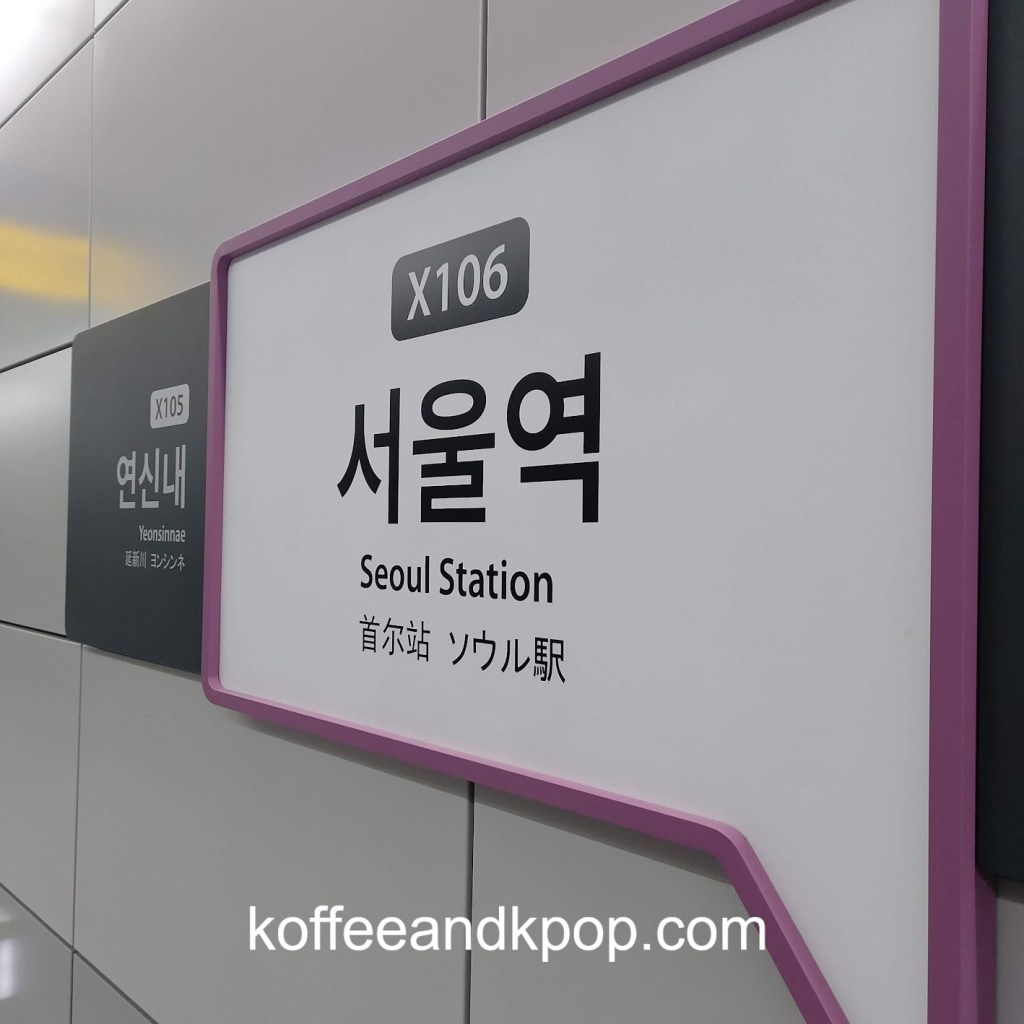
The GTX is a fun and useful addition to the rail system in the Seoul region. Its design is very streamlined, with large open spaces to prevent over-crowding, and a pleasant purple color. The escalators are new with green lights illuminating the bottom. I was pleased to see so many workers who were standing along the way to guide people through what can seem like a lot of open space, and it seems like quite a few people were taking the GTX-A from Seoul Station out to the other stations currently being serviced, such as Yeonsinnae and Daegok.
I’m excited to ride again, even if the initial ride made me a little disoriented towards the end because of the speed and depth underground.







 Koffee & Kpop
Leave a reply to Koffee & Kpop Cancel reply