My friend Nicole and I visited the Songpa Book Museum and Wayo Coffee sometime early this year. The Songpa Book Museum is an absolute must-visit for book lovers, so read on to find out why!
But first, coffee:
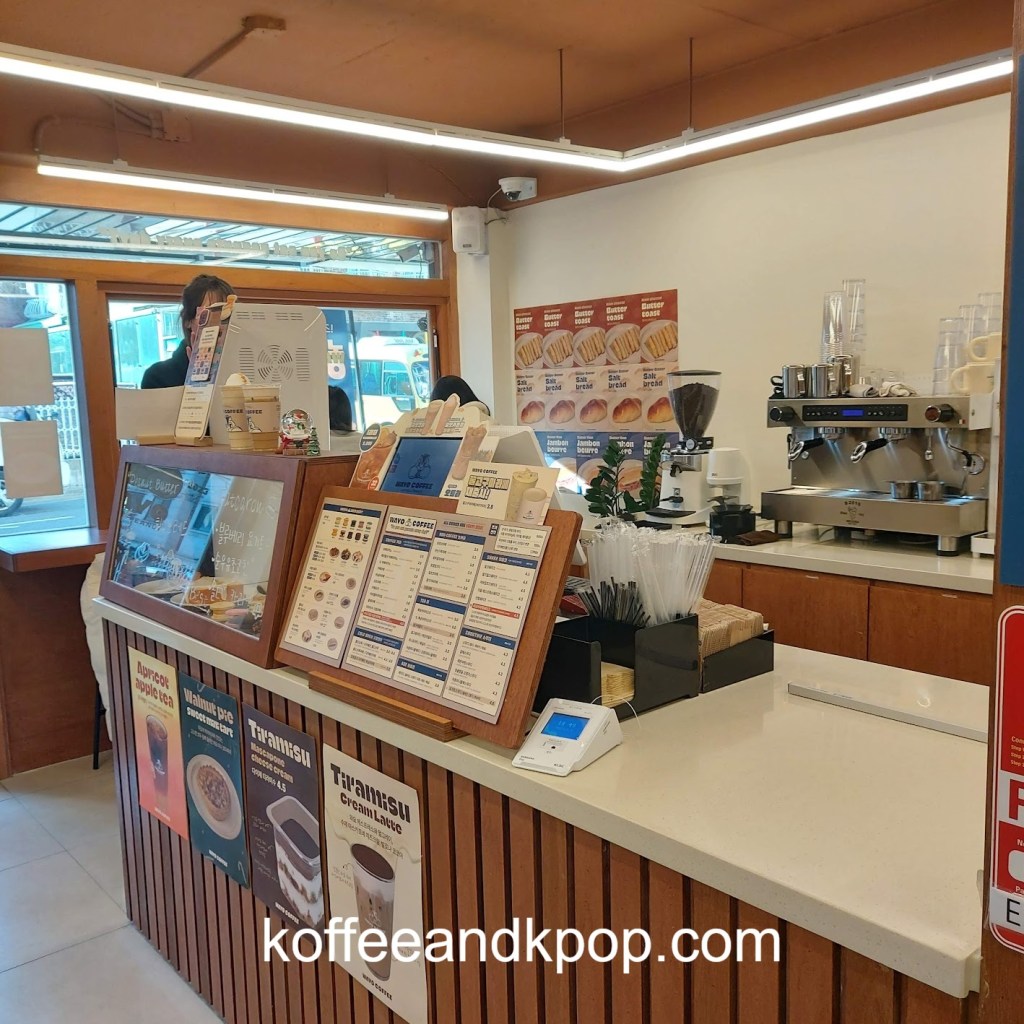
Wayo Coffee was somewhat close to the Book Museum and we stopped there for some refueling after walking around the museum. It had an obnoxiously large sign out front, and specializes in peanut-flavored coffee. They also had a snack menu for your furry puppers!
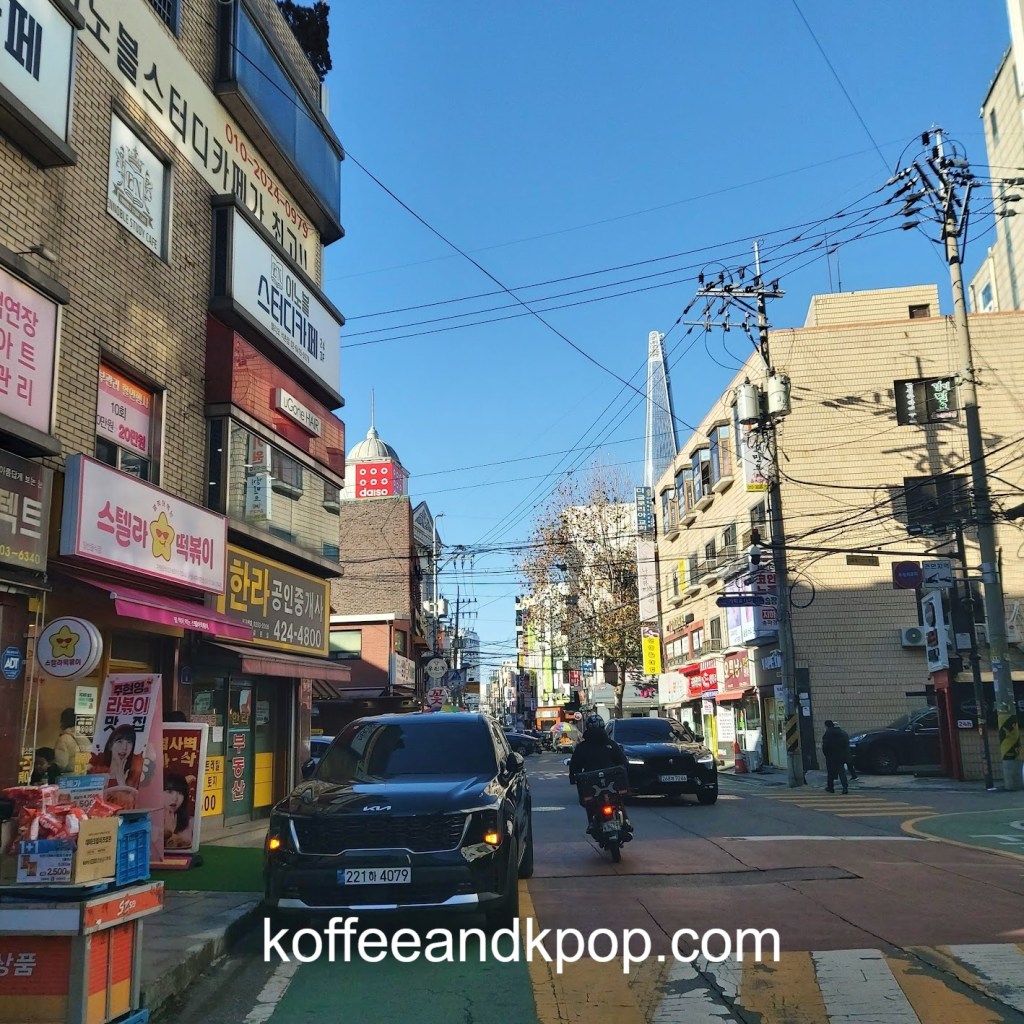
vegetables for sale in plastic pots sitting on top of plastic stools along the sidewalka sign for a “hot dog” shopmini 붕어빵, bungeo-ppang, fish shaped pastry filled with red bean pasteSongpa street scenea very large sign for Wayo Coffeeoutside of Wayo Coffee, with the question “Do you eat peanuts every day?” on the windowposter inside the cafe advertising various peanut-flavored drinks and pastriesregister of Wayo Coffeea menu of dog snacks that look like chicken drumsticks, pizza, and wafflestiramisu latte, salt bread, and 호두과자 or walnut cookiesmacaron in plastic with a sticker of the cafe’s mascot of a squirrel with a peanut in its mouththe Wayo mascot on the side of a white mugfake iced latte of some sort with fake whipped cream, sitting on the counter
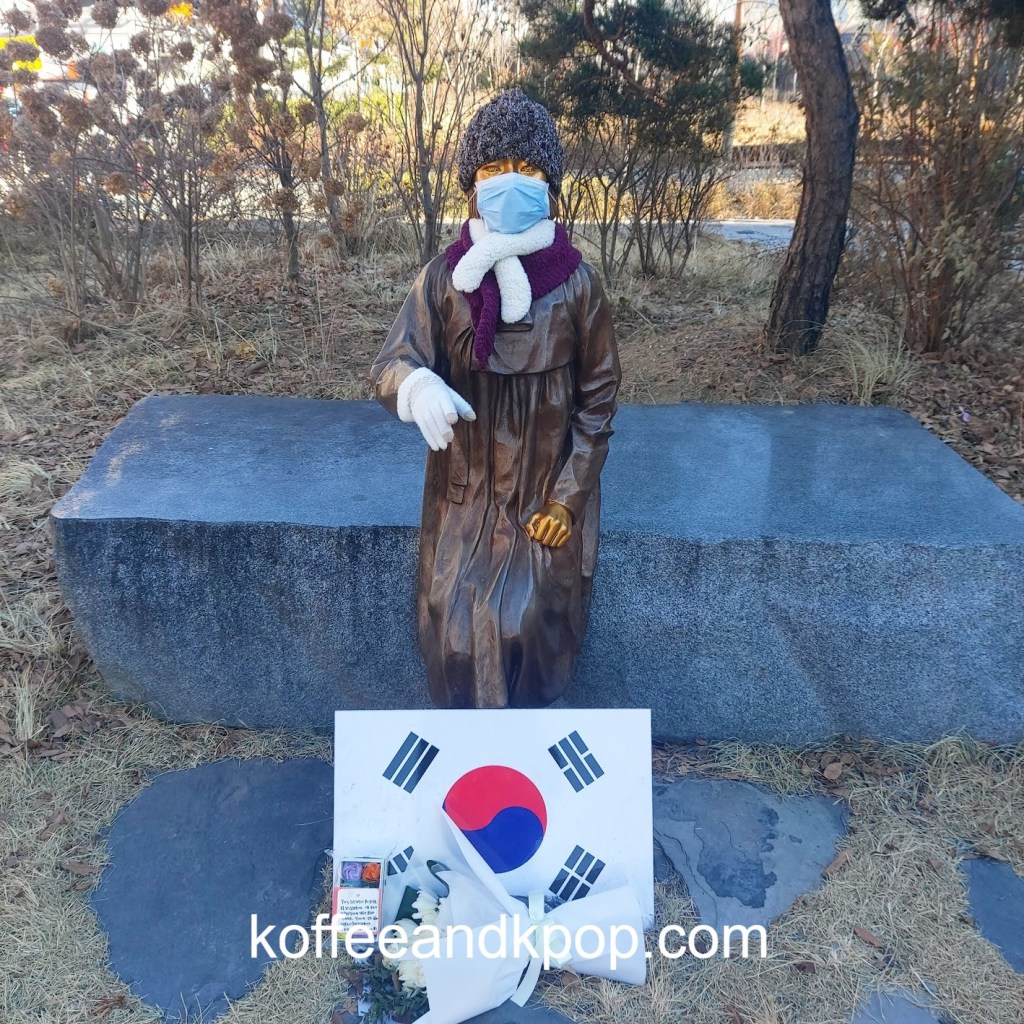
I know I said we went to get coffee after the museum so this blog entry is a bit flipped, but I saved the best for last. Let’s head to the museum now. The museum is pretty easy to find, and there is a comfort woman statue in a little garden area outside, so be sure to pay your respects before heading in.
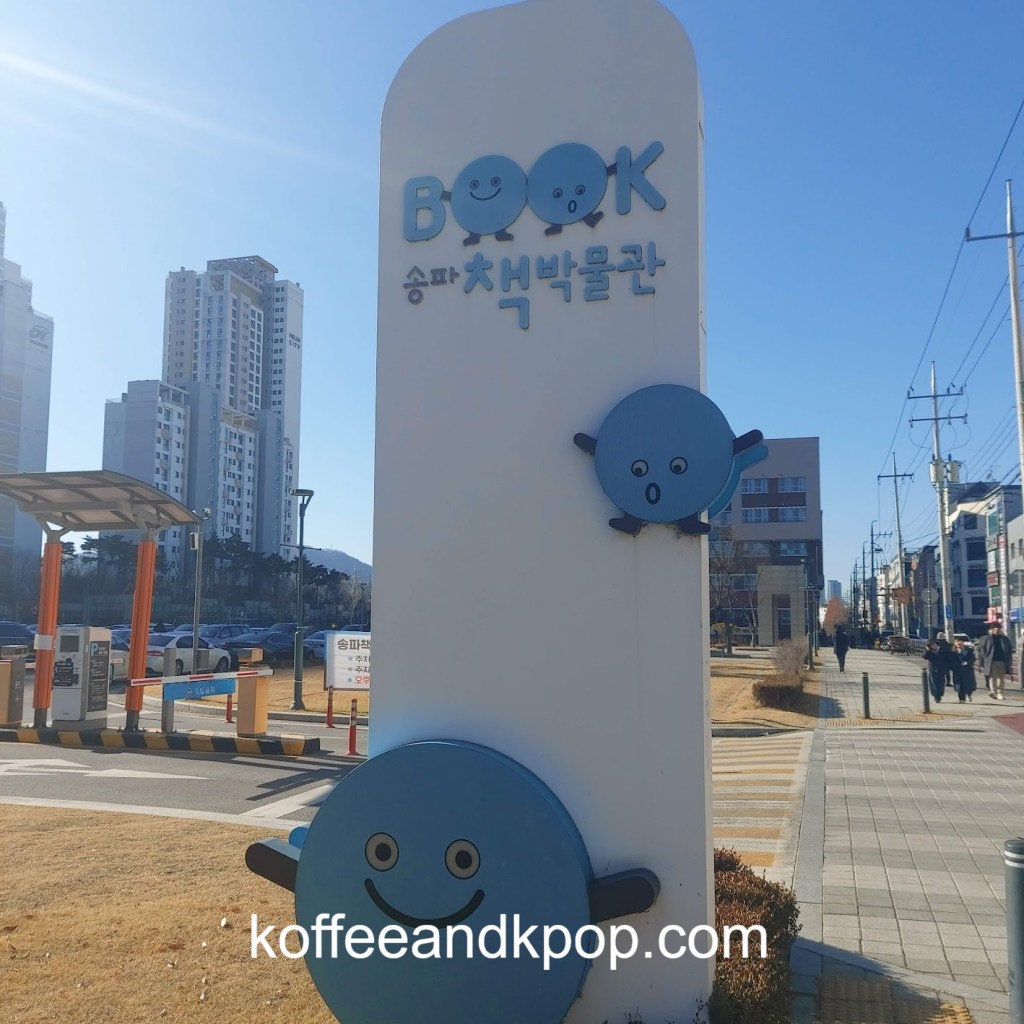
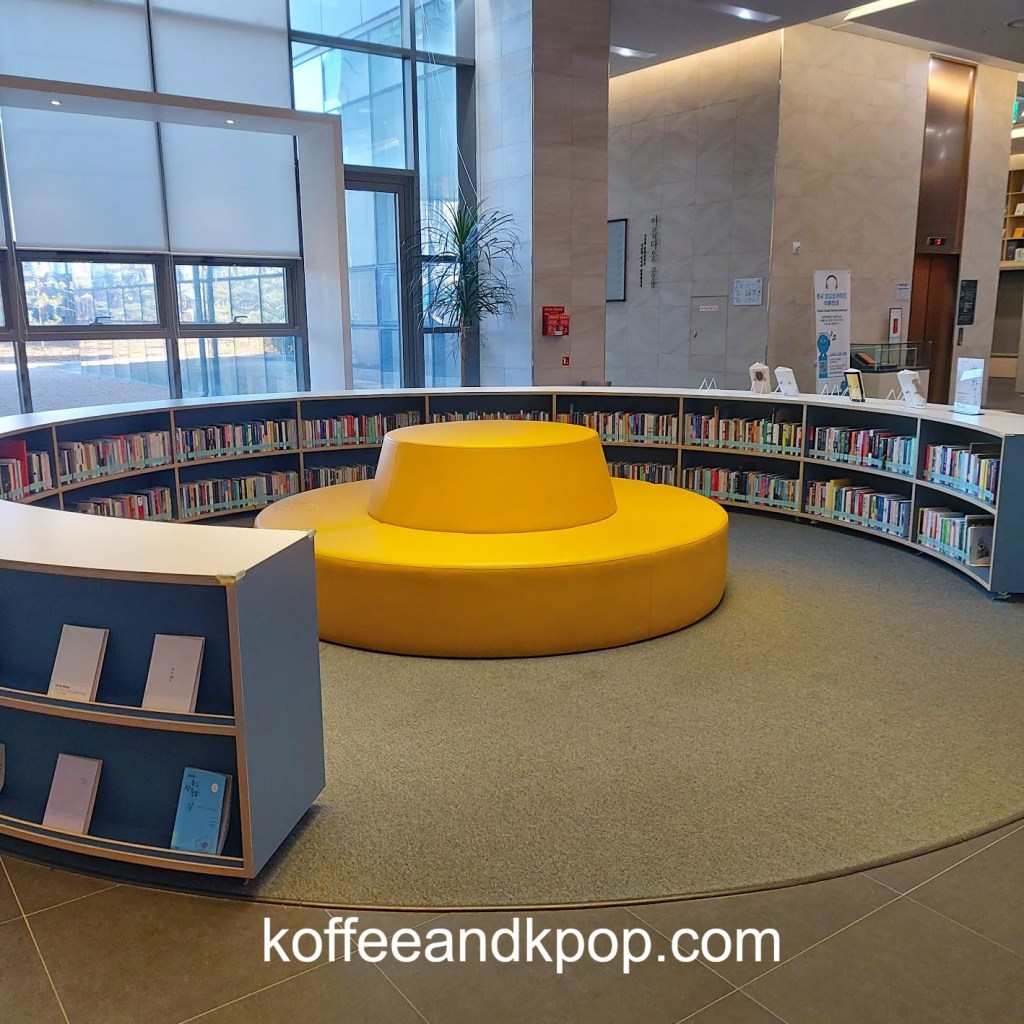
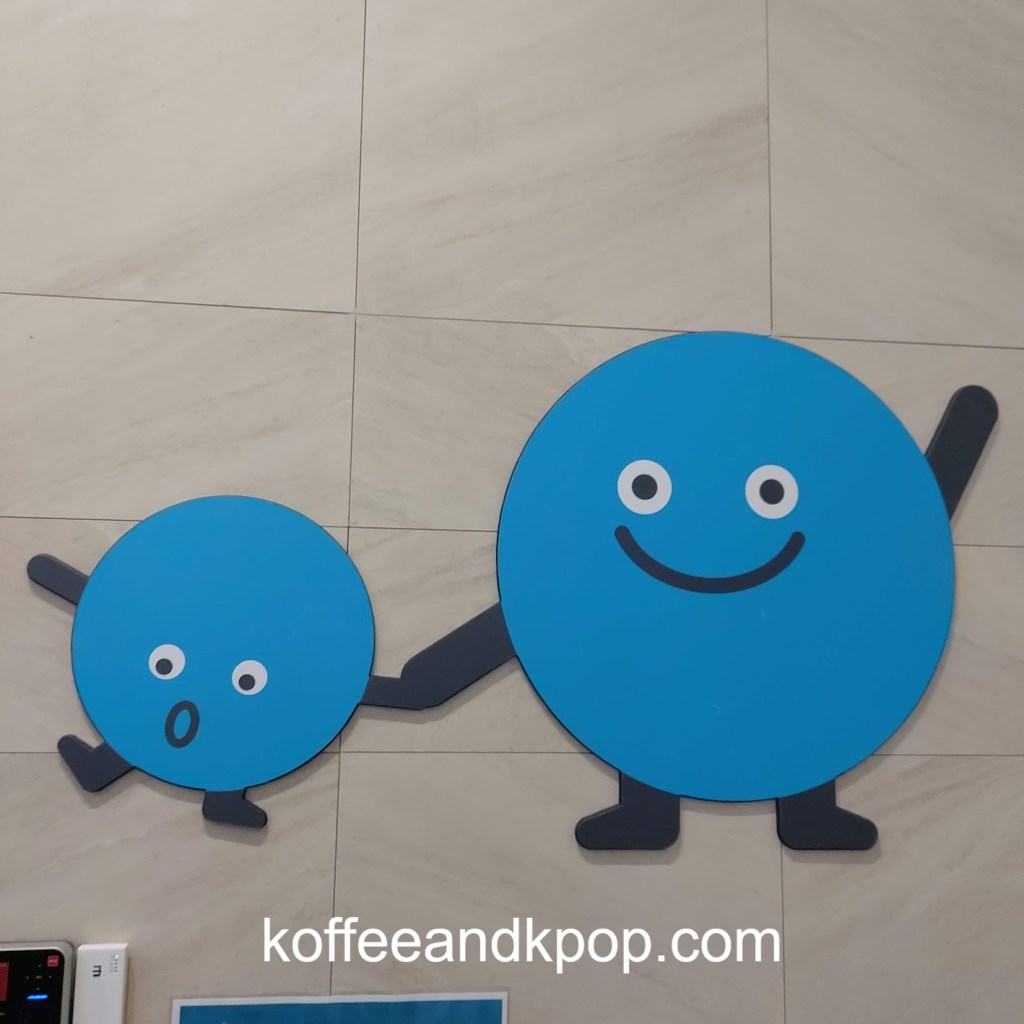
sign for the Songpa book museumoutside of the book museuma statue of a comfort woman, wearing a hat, surgical mask, scarf, and single glove, with a poster of the Korean flag in front of her feet along with a bouquet of flowersthe statue’s clenched left hand is a golden colorthe statue’s right hand is wearing a glove and reaching for something in the distanceclose-up of the statue’s faceiconic JYP on the cover of a Daejoonggayo magazinea fake illustrated microphone boothsome circular yellow seating in the center of an open circular bookshelfsome of the books on the outer display of the bookshelfKorean cover of “Life of Pi” by Yann Marteltwo yellow seats in an audiobooth with a pair of headphones hanging up and a tablet on a table in the centertwo smiling blue dots, one representing an adult and the other a child, holding hands
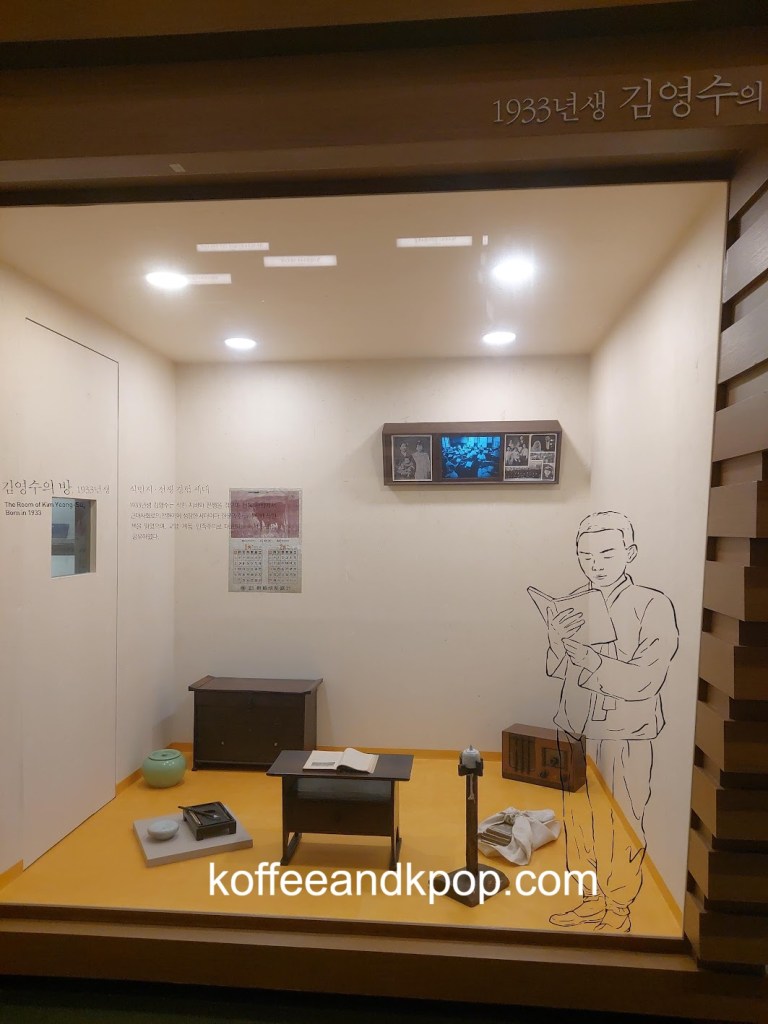
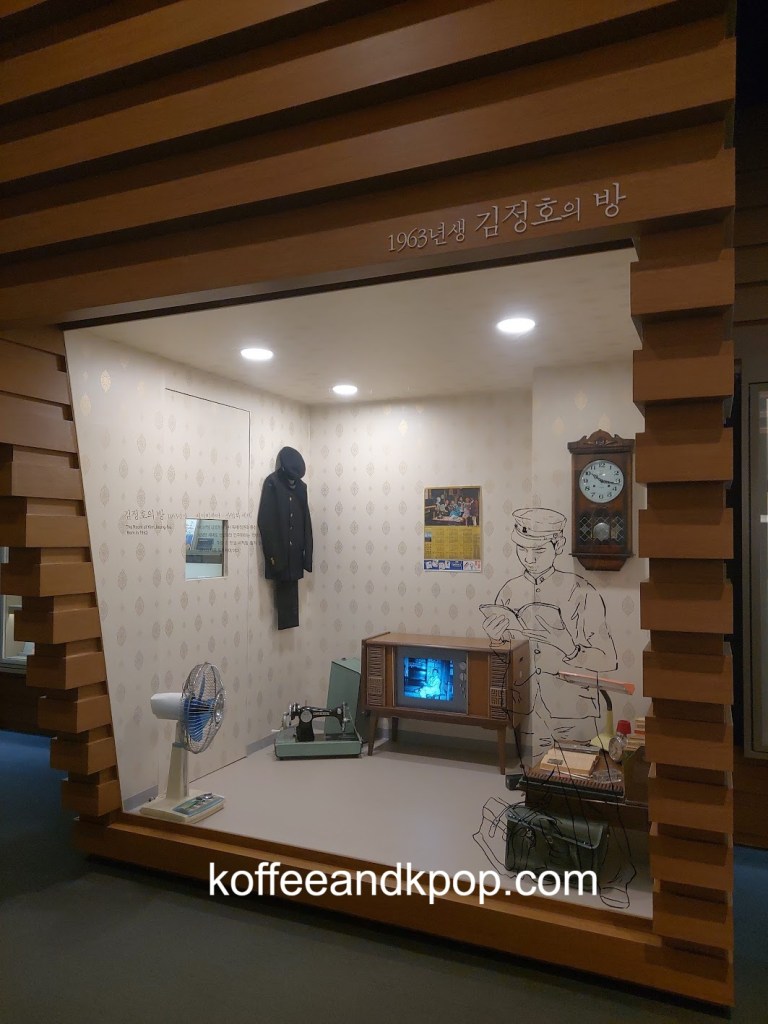
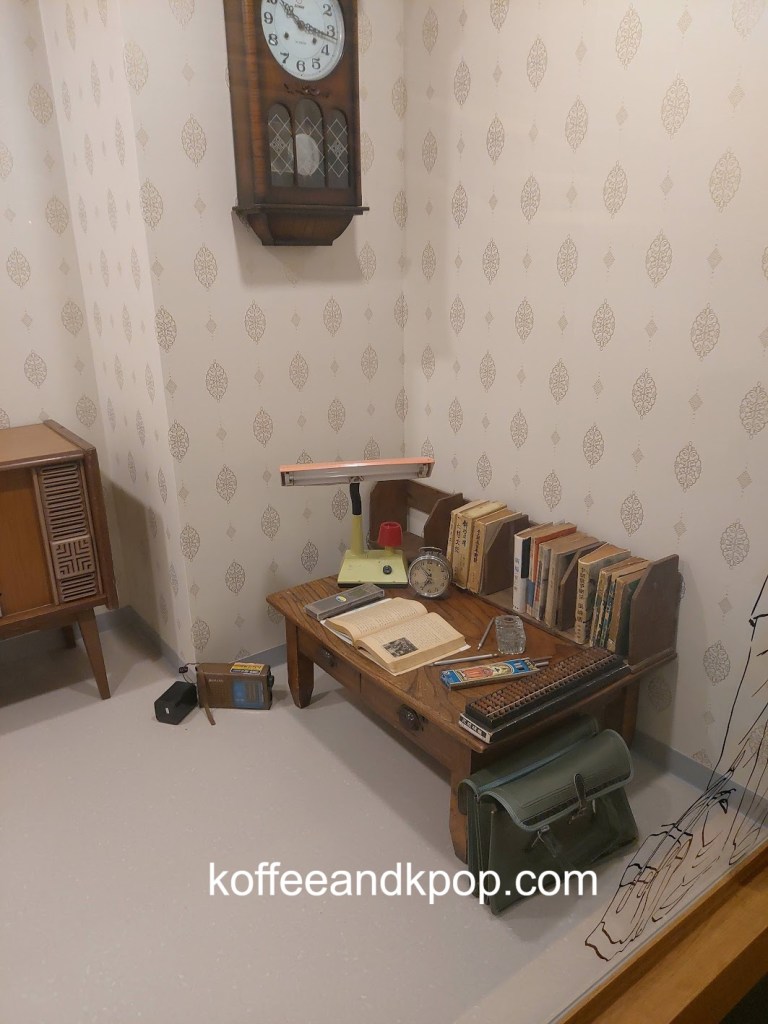
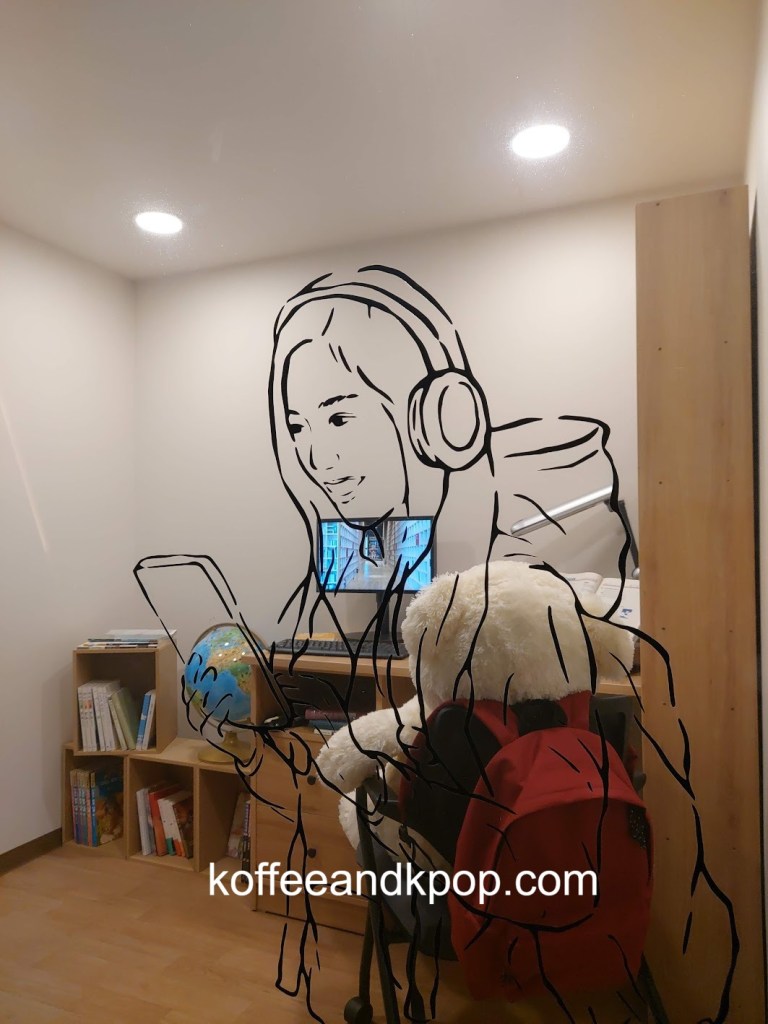
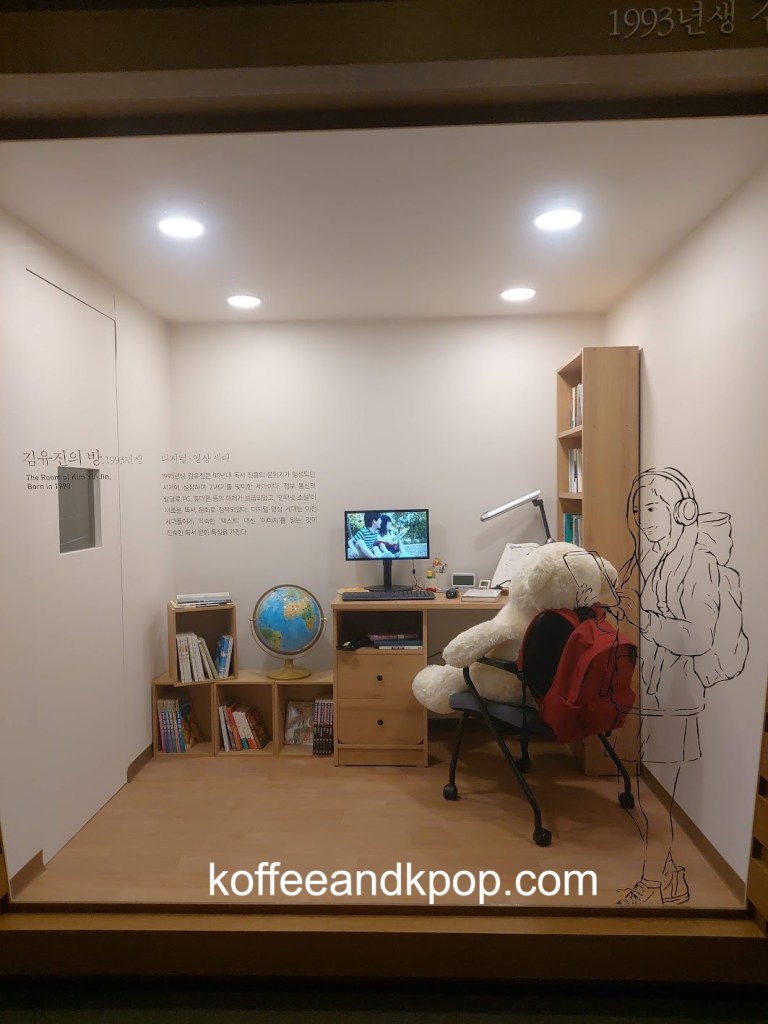
One of my favorite parts of the museum were the illustrated and decorated rooms meant to show what readers of a particular generation lived like. Each glass room had an outline of the person reading in white paint on the glass and the room was decorated with objects that were used at the time they were alive. There was also a lot of built-in seating and some special books on display.
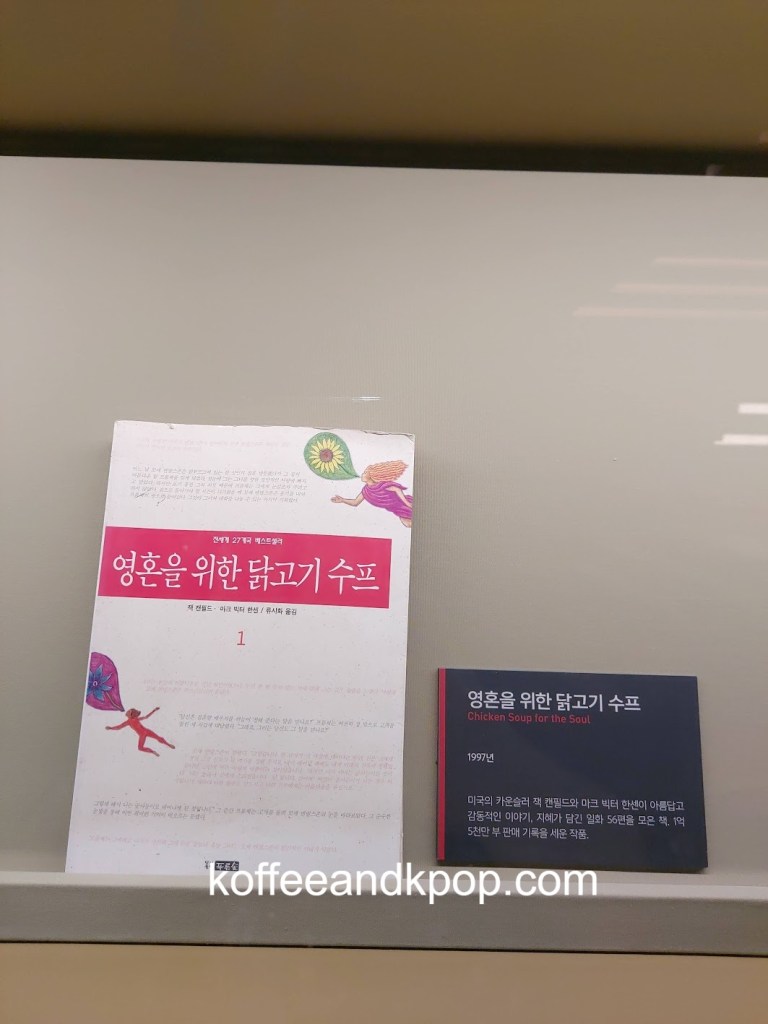
a display on writers labeled “Literary Gluttons of the Joseon Dynasty”a Korean book from 1959 entitled, “Hagwon” (the type of school I teach at here in Korea)a Korean copy of the 1997 best-seller, “Chicken Soup for the Soul”tiered steps with built-in lights, book nooks, and cushions to sit on while readinganother view of the tiered stepsmore seating; along the wall is a generational timeline naming each generation and important books published thenThe Room of Kim Yeong-Su, born 1933Yeong-Su is wearing very traditional, yet casual hanbok and the room features a candle on a post, a paper book opened on a reading stand, a radio, and what looks to be a calligraphy brush and ink potclose-up of Yeong-SuThe Room of Kim Jeong-Ho, born 1963Yeong-Ho is wearing a school uniform that looks almost military-esque, and his room features things like an electric fan, sewing machine, and televisionclose-up of Yeong-hoclose-up of Yeong-Ho’s deskclose-up of Kim Yu-Jin; she is wearing headphones and looking at what is presumably a tabletThe Room of Kim Yu-Jin, born 1993; her room includes a gigantic white teddy bear sitting in a computer chair in front of a computer and a tall bookcase
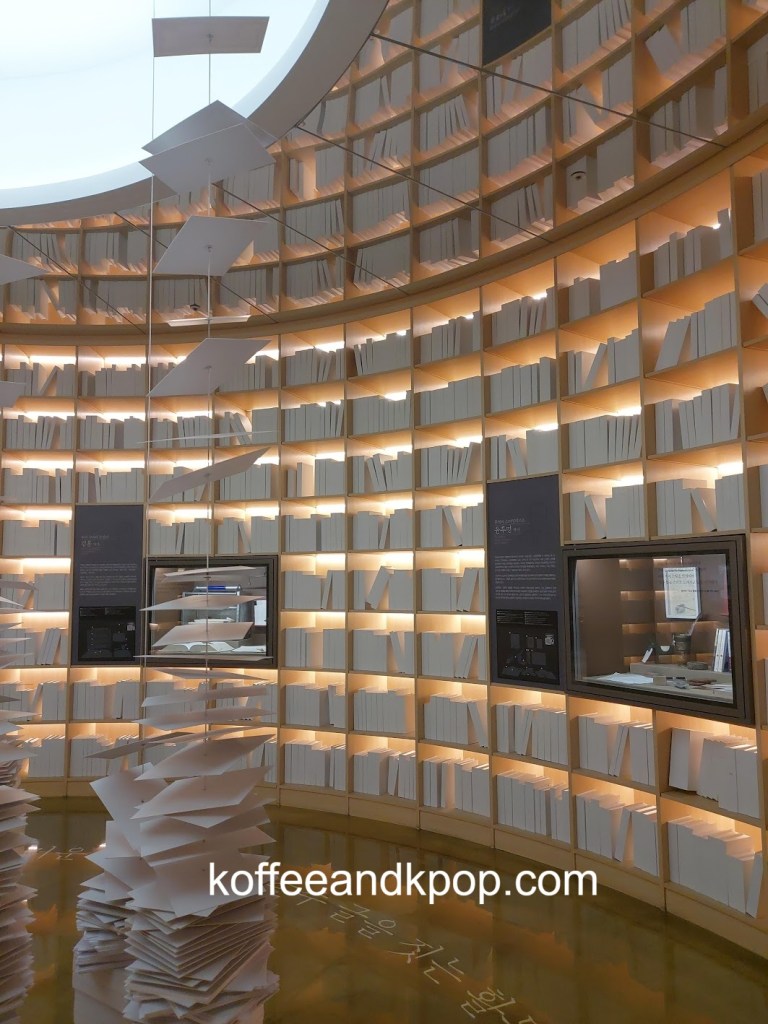
Another favorite part of the museum is this rotunda room featuring a desk in the center with stacks of paper being lifted into the ceiling (or are they floating down to the floor?) around it. On the outer perimeters of the room, in little nooks in what is created to look like floor-to-ceiling bookcases with white books, are displays on influential Korean writers.
a desk in the center of a round, dimly lit from behind fake bookcases around the perimeter, room, featuring stacks of papers being lifted up to the ceilingtwo of the nooks can be seen hereclose-up of the papersview from behind the deskanother view of the desk in the roomJeong Yu-jeong’s nook, featuring her (amazing) thriller The Good Son, along with some sketches and personal notes, as well as empty pen cartridges
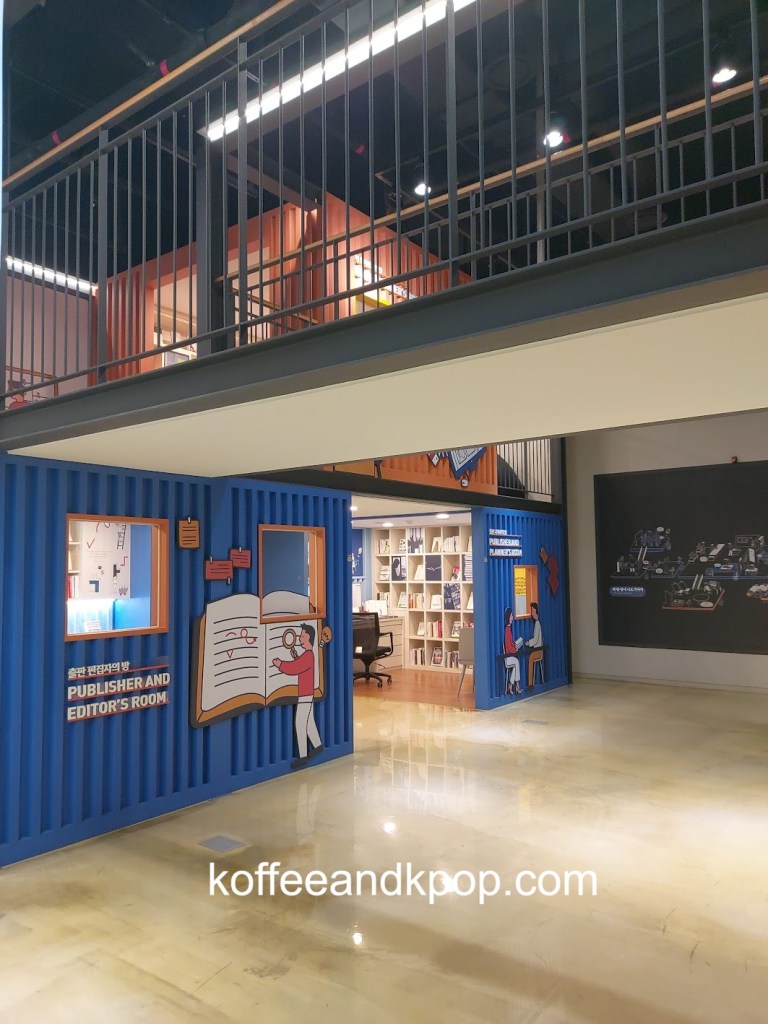
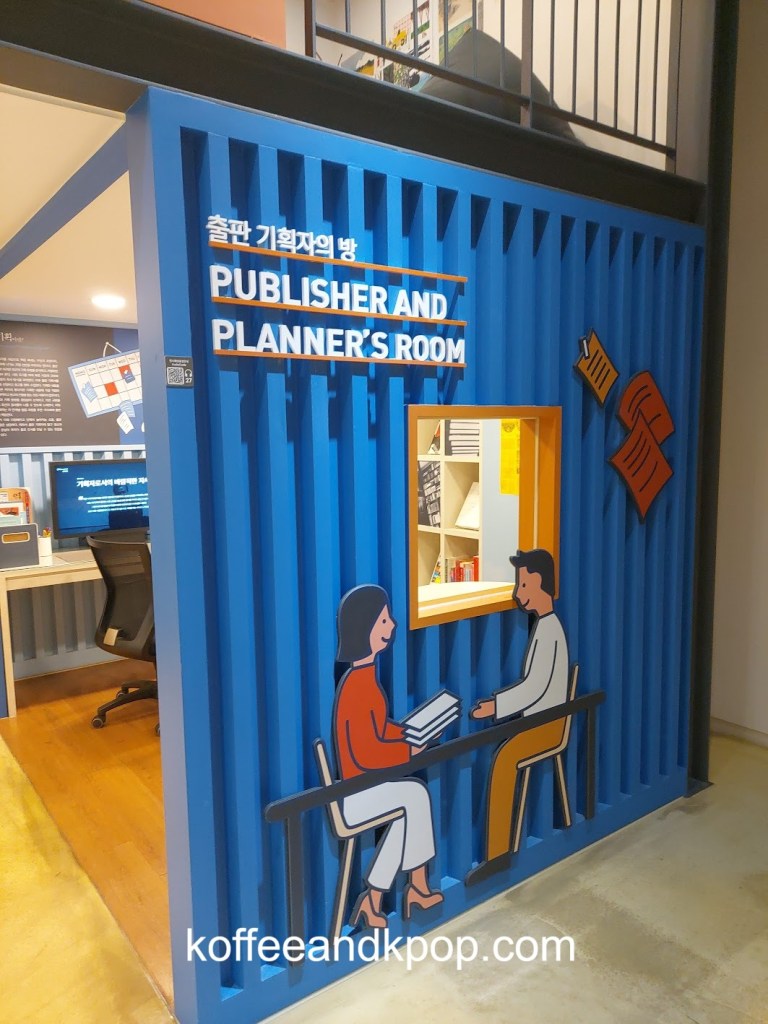
Next up was a little area with what is made to look like shipping containers, holding different rooms that relate to planning, editing, and publishing.
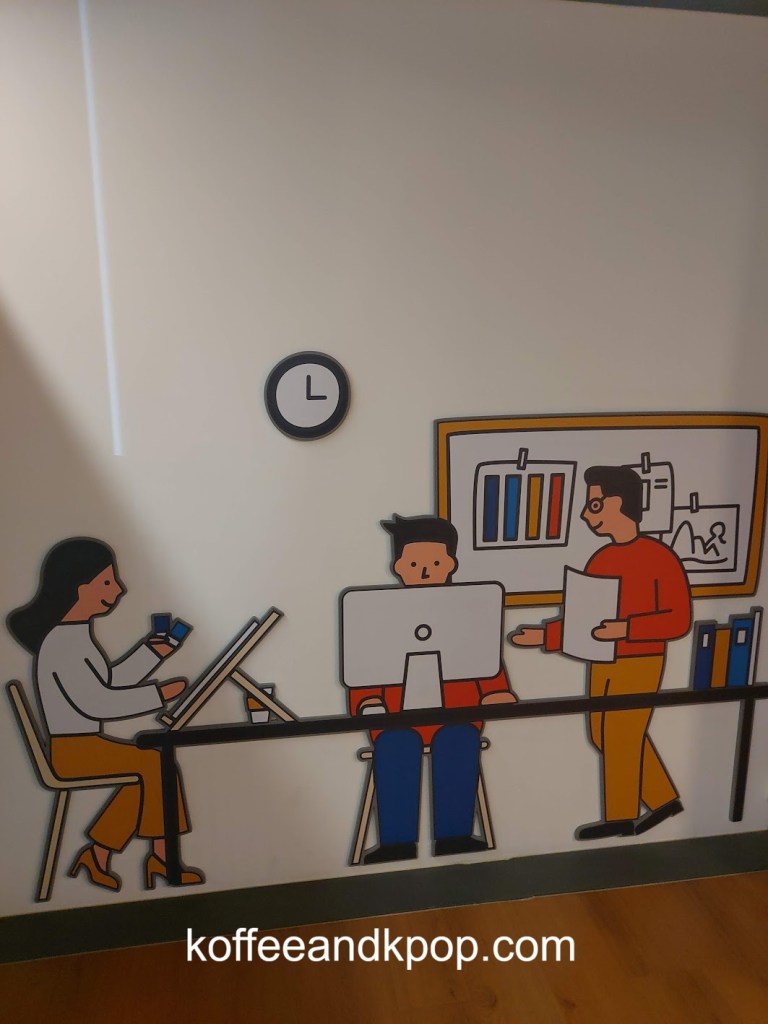
general view of the fake shipping containersclose-up of the fake publisher and editor’s roomexterior of the publisher and editor’s roomexterior of the publisher and planner’s rooman illustration of people at work editing and working on a computer
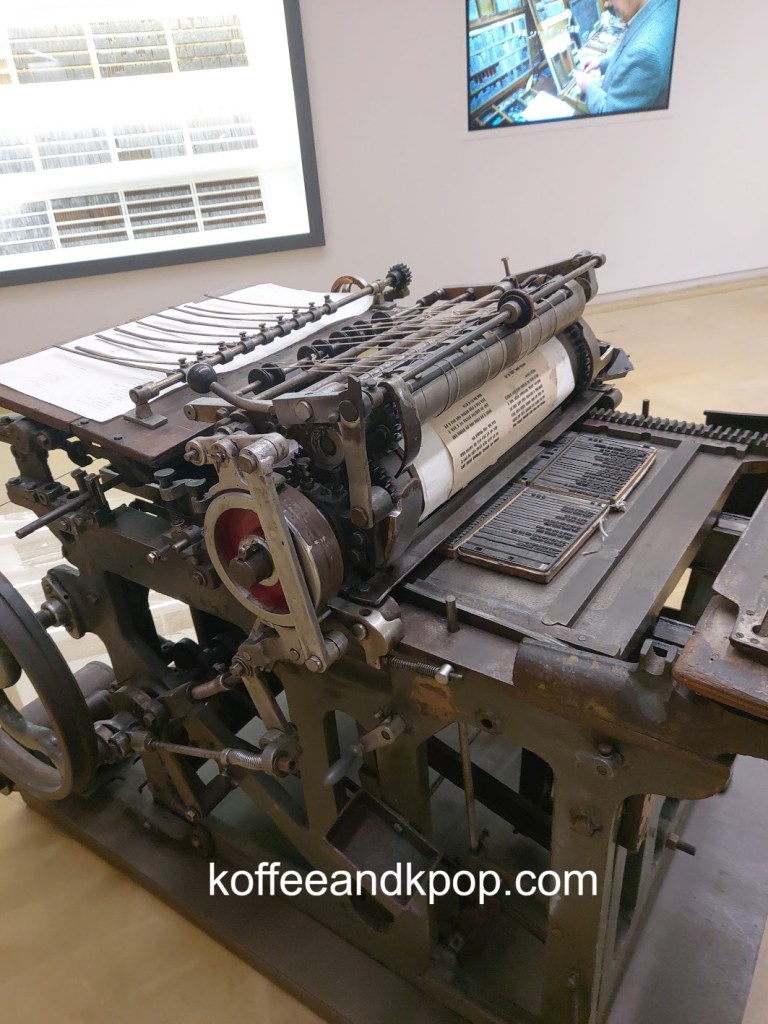
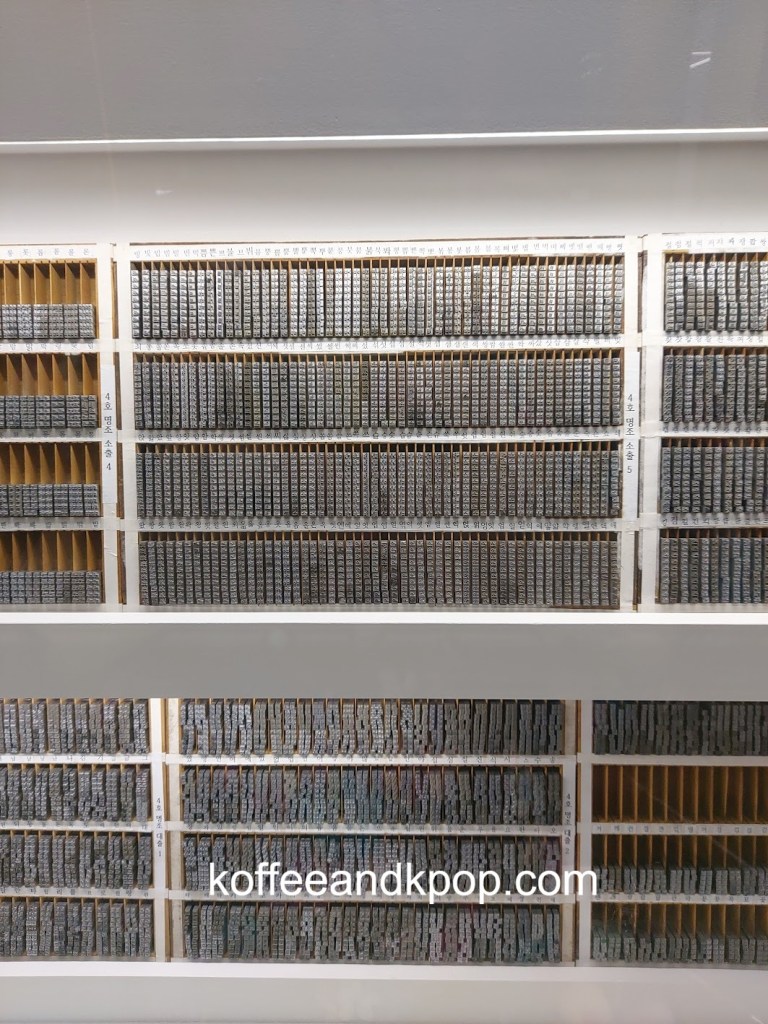
Just outside the publishing area sat a massive printing press. It hadn’t dawned on me until then that printing presses around the world are vastly different, and often very complex, depending on the language they’re using. There was a section for Hangeul and another section for Hanja. In English, an old school printing press would work by imprinting one letter at a time–like “d” followed by “o” followed by “g.” In Hangeul, however, words are not spelled out in a horizontal manner, but rather by making syllable blocks, so every sound would need to have their own separate piece, making the number of pieces needed to construct a sentence more in number than the same sentence in English. Basically, they need far more than 26 pieces.
the printing pressHangeul press piecesHanja press pieces
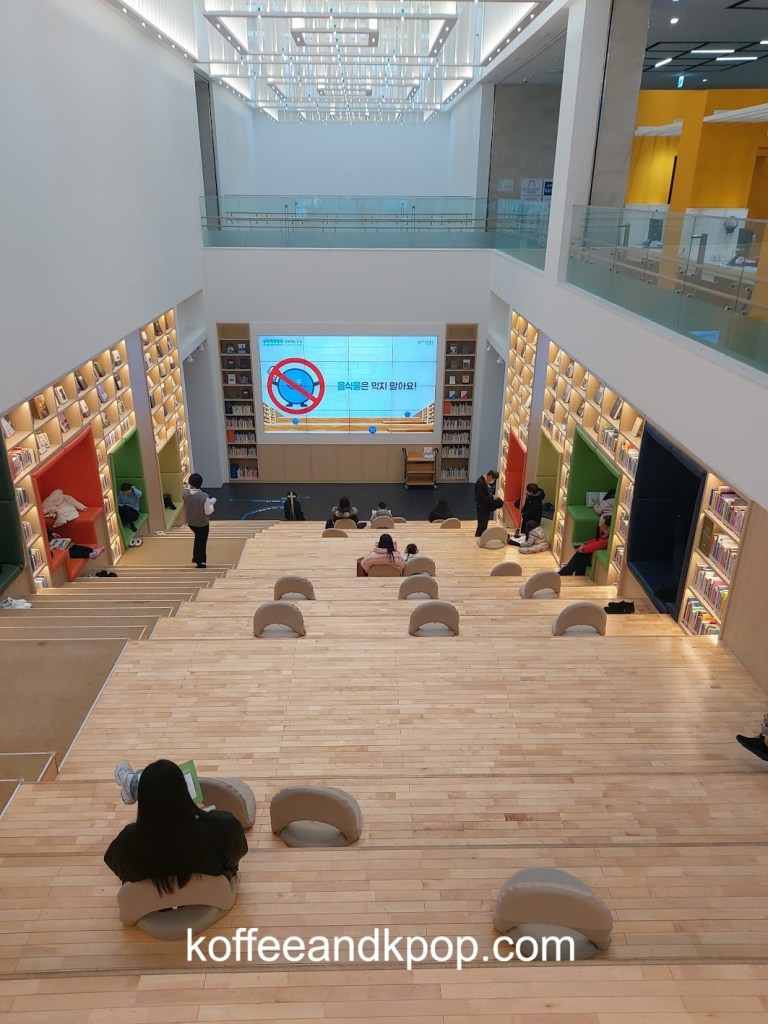
Let’s take a look now to look at the main staircase of the museum, which doubles as seating, as it often does in Korea. They also had some spots around the museum with little nooks and books that you could take off the shelf and peruse.
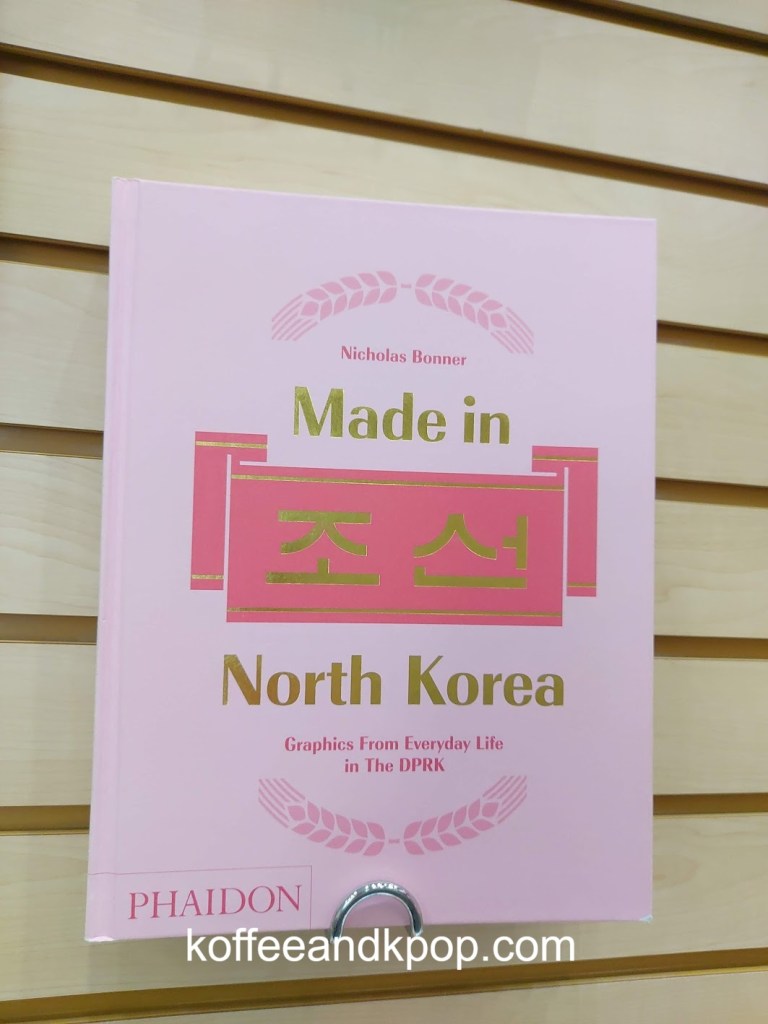
the staircase looking upthe staircase looking downthe staircas as seen from abovesquare ceiling lightsbooks displayed along a walla book on the French artist Yves Klein; the cover depicts a cartoon version of Klein holding up a hand covered in International Klein Blue, a color he developed and used“Made in North Korea: Graphics from Everyday Life in the DPRK”a nook in one of the bookcases for sitting and reading
The Songpa Book Museum is open 10am to 6pm, but they are closed on Mondays. Admission is free!






























 Koffee & Kpop
Leave a comment